The basic question: transport, steps, atmosphere
On the Amalfi Coast, your base decides how your holiday feels. The towns lie between steep slope and sea, the only coastal road is narrow, and almost everywhere you get around on foot, up and down steps. Three questions help with the choice: How quickly can you reach the bus and the ferry? How many steps lie between the stop, your room and the beach? And do you want bustle or calm in the evening?
Positano, Amalfi and Ravello are the best-known answers, and they differ clearly. Smaller places such as Atrani, Minori and Praiano are also worth a look if you want a little less crowding or are planning particular excursions. As a rule: the closer you stay to a hub, the less your day depends on a full bus or a taxi.
Positano: steep, lively, with a view of Li Galli
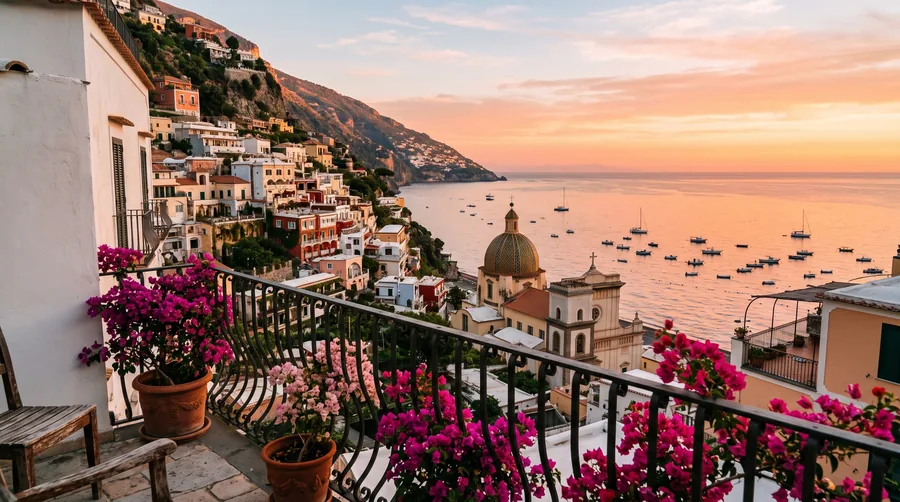
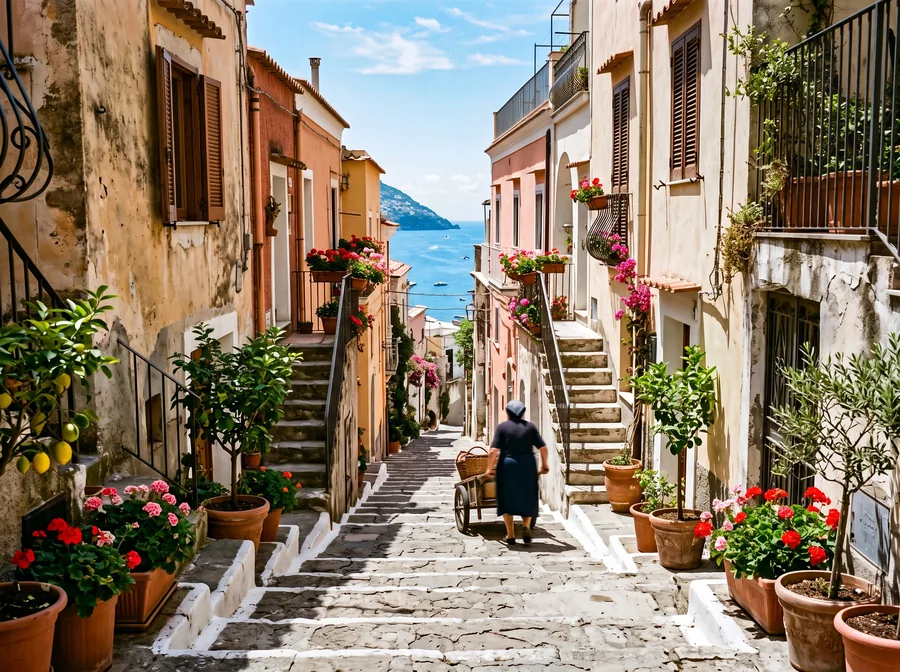
Positano rises like an amphitheatre from the beach up the slope. The SITA buses stop at the top on the coastal road, at the stops Sponda and Chiesa Nuova, and from there lanes and steps lead down to the Spiaggia Grande. A local bus runs through the town and up to Montepertuso and Nocelle. With light luggage that is no problem; with two big suitcases, every route becomes a task.
In return, Positano offers a lot: the main beach and the smaller beach of Fornillo, restaurants and shops, ferries to Amalfi and Salerno as well as to Sorrento and Capri, and boats to the Li Galli islands off the coast. In the evening the town is lively. Positano suits couples and anyone who wants to combine beach, boat and evening life. It is also the destination of the Sentiero degli Dei. It is less suitable for travellers who find many steps hard; when booking, check how far the accommodation is from the nearest stop and whether there are steps in between.
Amalfi: short routes to bus and ferry
In the Middle Ages, Amalfi was the centre of a maritime republic and gave the whole coast its name. Today the town is the transport hub: at the harbour, the bus lines to Positano and Sorrento, to Salerno, to Ravello and to Agerola begin, and at the pier the ferries to and from Salerno, Positano and Minori dock. If you travel without a car and plan many excursions, you save yourself most changes from here.
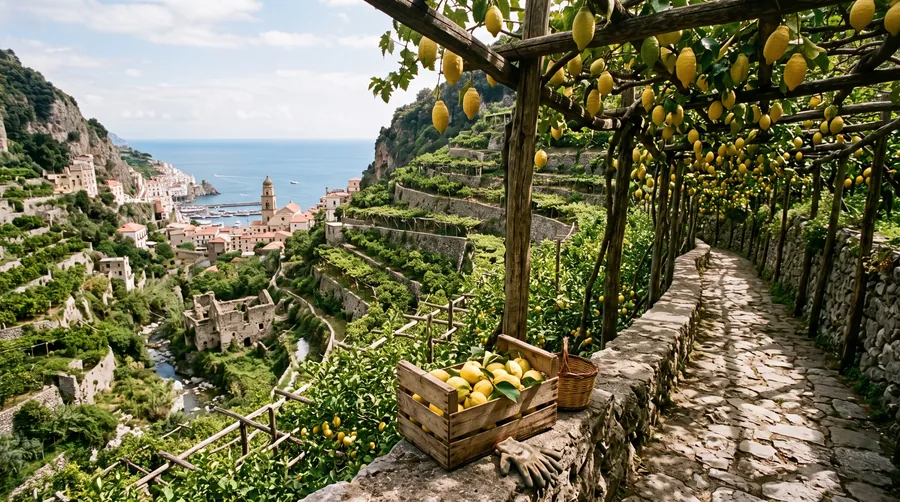
The centre around the Cathedral of Sant’Andrea is full of day visitors during the day and quietens down in the evening. Behind the cathedral, the Valley of the Mills, the Valle dei Mulini, leads up into the mountains; there you find old paper mills and lemon groves, such as the farm of the Amalfi Lemon Experience. Amalfi suits first-time visitors, travellers without a car and anyone who wants to go somewhere different every day. If you want peace, choose accommodation a little above the centre or in the neighbouring village of Atrani.
Ravello: quiet above the sea
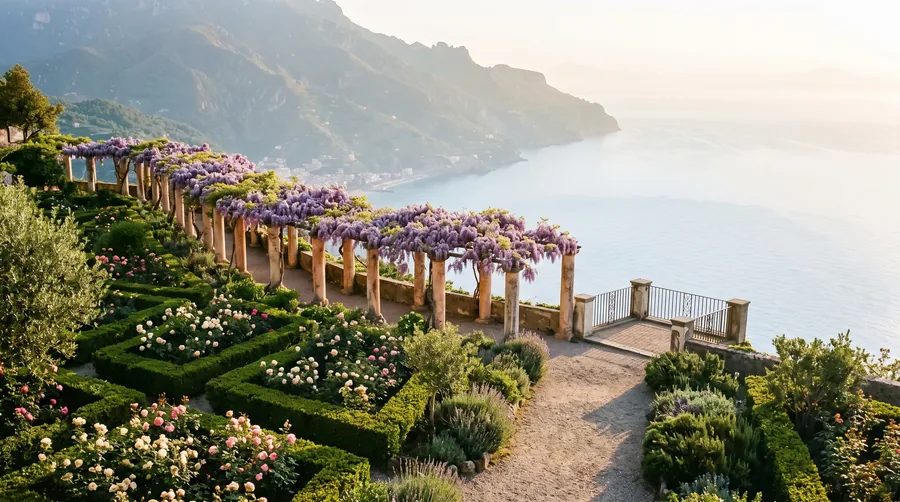
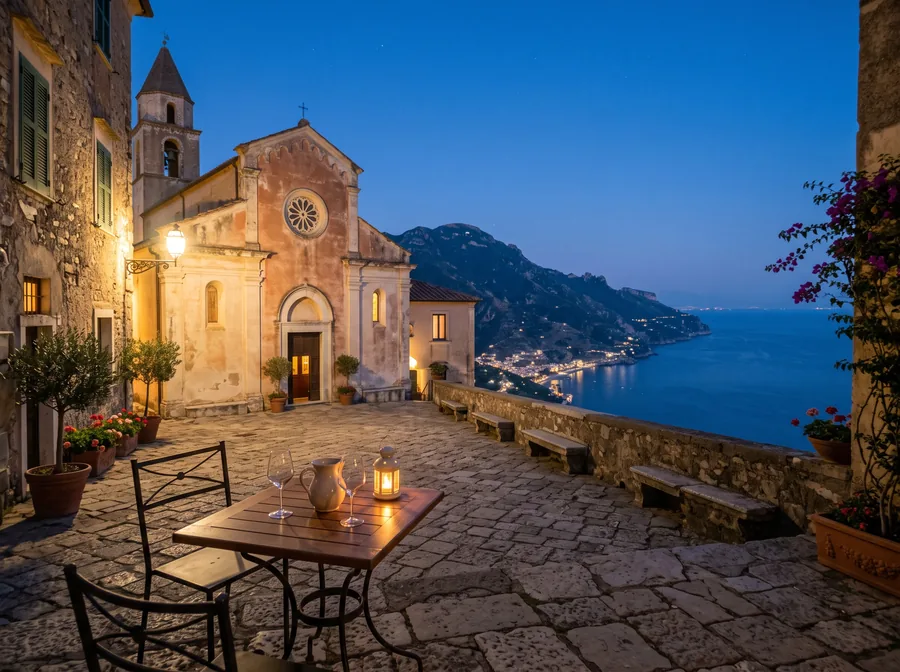
Ravello lies about 350 metres above the sea on a ridge above Amalfi and Minori. The town has no beach or harbour; to swim, you take the bus on the Scala-Ravello-Amalfi line down to Amalfi or take a taxi. In return, Ravello is quieter than the towns by the water, above all in the evening, and the gardens of Villa Rufolo and Villa Cimbrone are among the best-known viewpoints on the coast.
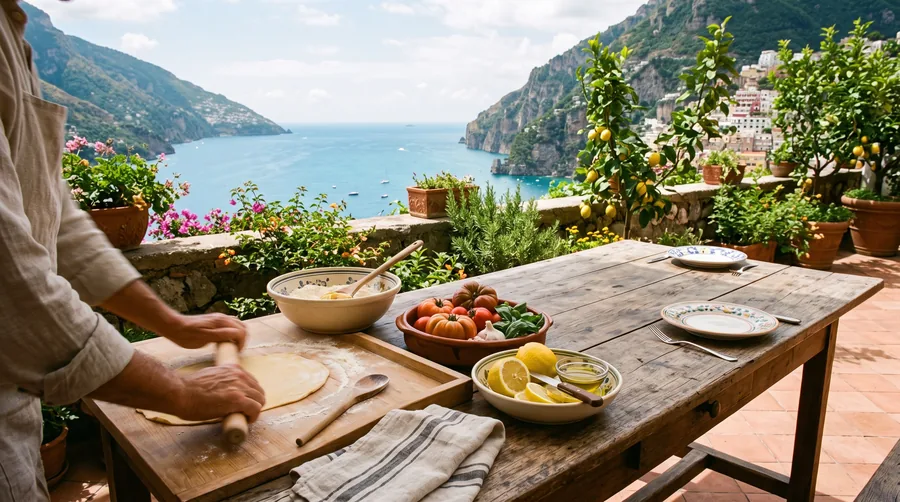
In summer, Ravello is a stage for music: the Ravello Festival took place for the 74th time in 2026, with concerts on the belvedere of Villa Rufolo. If you stay in town, you need no ride back after the evening concert. One example of a house with history is the Hotel Villa Cimbrone, which lies car-free at the end of a paved footpath. If you want to learn to cook, you will find the cooking school Mamma Agata in town. Ravello suits couples, culture-minded travellers and anyone who prefers calm to the beach.
Alternatives: Atrani, Minori and Praiano
Atrani lies right next to Amalfi; by bus it is five minutes, according to the timetable. With an area of about 0.12 square kilometres, it counts as the smallest municipality in Italy by area. The village has a small beach and a piazza but stays quieter than Amalfi in the evening. Travelmar ferries are not due to call here until June 2027.
Minori, east of Amalfi, lies almost at sea level; the waterfront promenade and the beach can be reached here without long flights of steps. Buses to Amalfi and Salerno as well as Travelmar ferries stop in the town. Minori has a long tradition in the lemon trade, and as early as the 19th century, families here made lemon liqueur. The town suits families and anyone who wants to reach the water without many steps.
Praiano lies between Positano and Amalfi on the bus line to Sorrento and is quieter than Positano. From here, stepped paths lead up to Colle Serra, where they meet the Sentiero degli Dei. Praiano is suited to hikers and to anyone who wants Positano within reach without living in the middle of the bustle. According to Travelmar, Praiano will have a ferry landing only from June 2027.
Which town suits whom
| Town | Setting | Transport links | Suits |
|---|---|---|---|
| Positano | Steep slope with beach | Bus (Sponda, Chiesa Nuova), ferry, local bus | Couples, beach and evening life |
| Amalfi | Old town at the harbour | Hub of all bus lines, ferry | First visit, travel without a car, many excursions |
| Ravello | About 350 metres above the sea | Bus to Amalfi, no harbour | Peace, gardens, concerts |
| Atrani | Neighbouring village of Amalfi | Bus, short routes to Amalfi | Peace close to the hub |
| Minori | Almost at sea level | Bus, ferry | Families, few steps |
| Praiano | Between Positano and Amalfi | Bus | Hikers, a quieter base |
What to look for when booking
Before booking, ask how many steps lie between the stop and your room and whether there is help with luggage. For houses without road access, it is worth planning your arrival with a transfer or a taxi to the nearest point. Also check whether the house is open during your travel dates: some businesses on the coast work seasonally, and the cooking school Mamma Agata, for instance, takes a break from 1 December 2026 to February 2027.
If you arrive by car, you need a parking space, and by no means all accommodations offer one. Also note the licence-plate driving restriction on peak days, which the article The Amalfi Coast without a rental car explains. For a week, a combination suggests itself: a few nights by the water in Positano, Amalfi or Minori, a few nights up in Ravello. Which kind of accommodation suits you is something the Accommodation Finder can work out, and the page Amalfi Coast gives an overview of the region.