Why a car is hardly worth it on the Amalfi Coast
The Strada Statale 163, Amalfitana for short, links Positano with Vietri sul Mare and is the only continuous road along the coast. It follows every headland and every bay. According to the state road company ANAS, many stretches are narrower than six metres, rock walls rise right up to the carriageway, and in several places two larger vehicles can barely pass each other. That is why permanent ordinances have applied since 2019: large vehicles are excluded, camper vans and vehicle combinations were, under the rules at that time, not allowed to drive between 06:30 and 24:00 all year round, and in summer marshals or traffic lights control the traffic at bottlenecks in alternating directions.
Then there is the question of parking. In Amalfi, Positano and Ravello parking space is scarce, and many places to stay are reached by steps rather than by road. If you travel without a car, you save yourself the search and can look out of the bus window at the sea instead of watching for the next bend. Bus, ferry and, for certain routes, a transfer cover the coast well, as long as you allow some time.
- Naples Airport to PositanoBusTransferTake the Curreri airport bus to Sorrento and change there to the SITA bus towards Amalfi. Without changing, only a pre-booked transfer will do.
- Naples Airport to AmalfiBusFerryTransferTake the SITA bus to Salerno, then continue by SITA bus via Vietri and Maiori or by Travelmar ferry to Amalfi. A transfer is more comfortable but more expensive.
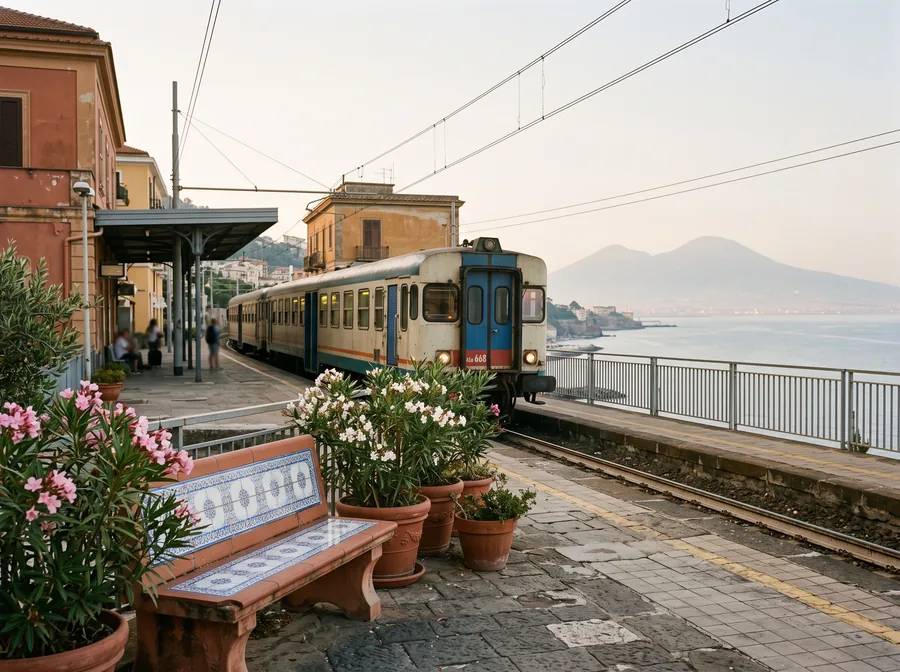
- Naples (station) to SorrentoTrainThe Circumvesuviana runs from Naples through the towns on the gulf to Sorrento. This is where the SITA buses via Positano to Amalfi begin.
- Salerno Airport to AmalfiBusTransferIn summer 2026, SITA express buses ran to the coast from 1 July to 6 September. Outside this period, your options are a transfer or the detour via Salerno.
- Salerno to AmalfiBusFerryTransferSITA bus via Vietri, Cetara, Maiori and Minori, or Travelmar ferry from Piazza della Concordia near the station, about 35 minutes according to the timetable.
- Salerno to PositanoFerryBusTransferDirect by Travelmar ferry, about 70 minutes according to the timetable. By bus you travel as far as Amalfi and change there to the line to Positano.
- Sorrento to PositanoBusFerryTransferSITA line Amalfi-Positano-Sorrento with the stops Chiesa Nuova and Sponda. Other companies offer ferries between Sorrento and Positano; check the timetable in advance.
- Amalfi to PositanoBusFerryTransferBuses via Conca dei Marini and Praiano, or Travelmar ferries. In summer the buses are often full, and early departures are more relaxed.
- Amalfi to RavelloBusTransferLine Scala-Ravello-Amalfi with many departures a day. Ravello sits on the hillside and has no harbour; in the evening a taxi is the alternative.
- Amalfi to Agerola (Bomerano)BusSITA line Amalfi-Agerola via Furore as far as Bomerano, the start of the Sentiero degli Dei. Travelmar also offers a shuttle in connection with the ferry.
Alternating number plates: the targhe alterne rule
On busy days the system of targhe alterne, alternating number plates, applies on the Amalfitana. It rests on agreements that the region, province, coastal municipalities and ANAS made in 2019 with the prefecture of Salerno, and on an ANAS ordinance (no. 340/2019) that unifies the rules of the individual municipalities for the whole route. According to ANAS, the two ordinances of 2019 apply every year from 1 April to 30 September unless they are expressly repealed.
The principle is simple: between 10:00 and 18:00, on days with an odd date, cars whose number plate ends in an odd digit may not drive; on days with an even date, it is plates with an even final digit that are affected. Under the ordinance of the municipality of Amalfi, exemptions applied to residents of the coastal municipalities, vehicles with a disabled permit, taxis and hire cars with driver (NCC), as well as emergency services and police. Ordinary hire cars used by holidaymakers therefore fall under the rule.
Which days are affected is set by the authorities for each season. For 2026, regional media reported closure periods around Easter and from 24 April to 2 May; a local portal named weekends and public holidays in June and July for the summer, as well as every day in August and September. The editorial team could not consult an official full calendar for 2026. Check the notices from ANAS and the municipalities before you travel, and ask your accommodation whether guests need a confirmation on the day of arrival and departure.
Getting there: via Naples or Salerno
Naples-Capodichino airport is the gateway to the Amalfi Coast for most travellers. From there are three sensible routes without a car. The first leads to Sorrento: according to the timetable (as of October 2026), the airport bus of the company Curreri runs eight times a day from the coach car park at the airport via Castellammare, Vico Equense and the towns of the peninsula to Sorrento station. You book tickets online up to four hours before departure. In Sorrento you change to the SITA bus via Positano to Amalfi.
The second route goes via Salerno. SITA SUD operates a bus line between Capodichino airport and Salerno, and from there buses and ferries run to Amalfi and Positano. Salerno is also the most convenient rail hub in the south of the coast, because long-distance trains from Rome and northern Italy stop here too. The ferry landing stages are on Piazza della Concordia, close to the station.
The third route is the train from Naples: from the airport you take the airport bus or a taxi to the station, and from there the Circumvesuviana runs to Sorrento. This option is worthwhile if you want to visit Pompeii on the way; with large luggage, a regional train with many stops is less comfortable.
If you fly into Salerno airport, there was a dedicated connection in summer 2026: from 1 July to 6 September, SITA SUD offered express buses along the motorway, with stops in Vietri sul Mare, Cetara, Maiori, Minori, Atrani, Amalfi, Conca dei Marini, Furore and Agerola. According to the operator, the ticket cost 10 euros and was available online or on the bus as long as seats were free.
Getting around the coast: the SITA buses
The backbone of local transport is the buses of SITA SUD. The hub is Amalfi: this is where the lines to Positano and Sorrento, to Salerno, to Ravello and Scala and to Agerola begin and end. The summer timetable has applied since 8 June 2026; SITA publishes it on its own website and in the apps of the Unico Campania transport association.
| Line | Main stops | Useful for |
|---|---|---|
| Amalfi-Positano-Sorrento | Conca dei Marini (Grotta dello Smeraldo), Praiano, Positano Sponda, Positano Chiesa Nuova | Western coast, connection to Sorrento |
| Amalfi-Maiori-Salerno | Atrani, Minori, Maiori, Cetara, Vietri sul Mare, Salerno (Via Vinciprova) | Eastern coast and the train in Salerno |
| Scala-Ravello-Amalfi | Atrani, Ravello, Scala | Ravello and the villages above |
| Amalfi-Agerola | Furore, Agerola with Bomerano | Start of the Sentiero degli Dei |
Practical for holidaymakers is the COSTIERASITA day ticket. It is valid for 24 hours from first validation for any number of journeys with SITA in the municipalities between Sorrento and Salerno, including Agerola, Ravello, Scala and Tramonti. You must validate it on your first journey and enter your name and date of birth; it is not transferable. Buy the ticket in advance at the ticket office in Salerno or at the association’s authorised sales points; SITA and the sales points state the current price.
In high season the buses between Positano and Amalfi are often full. If possible, board at the terminus in Amalfi, and build in a buffer if you have to catch a ferry or a train. In Positano the SITA buses stop at the top on the coastal road, at the Sponda and Chiesa Nuova stops. You get down into the village on foot via lanes and steps, or by the local bus, which also serves the higher districts of Montepertuso and Nocelle.
Ferries: more relaxed, but weather-dependent
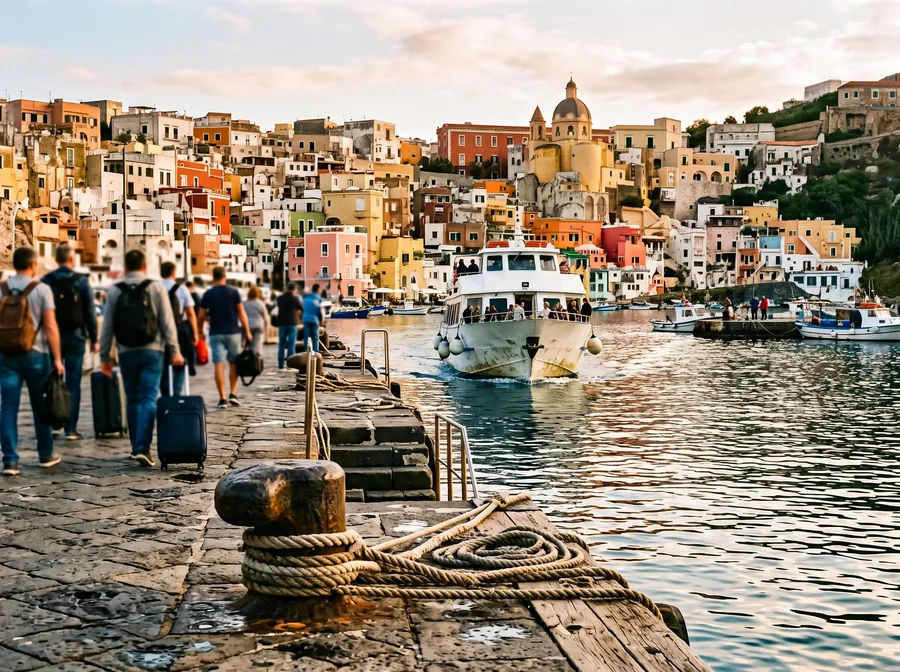
On the water, many places are reached faster than by road. According to its timetable, the Travelmar company links Salerno, Vietri sul Mare, Cetara, Maiori, Minori, Amalfi and Positano all year round; Atrani and Praiano are due to be added from June 2027. According to the timetable valid from 1 October 2026, the ferry from Salerno takes about 35 minutes to Amalfi and about 70 minutes to Positano. The fare includes one piece of hand luggage up to 45 by 35 by 20 centimetres; if you have larger suitcases, clarify the conditions in advance.
Other companies link Positano and Amalfi with Sorrento and Capri, which suits day trips. Bear in mind that ferries can be cancelled in wind and high seas. If you have to catch a flight on a particular day, you should know a bus or transfer as a fallback for the last leg. How to use the sea for a whole day out is covered in the article on boat trips on the Amalfi Coast.
Taxi, transfer and water taxi
For the journey from Naples airport to your accommodation, a pre-booked transfer with a driver (NCC) is the most comfortable solution, especially with children or a lot of luggage. Vehicles with a driver and taxis are exempt from the number-plate rule. Agree the price, pick-up point and final stop in writing beforehand, because many hotels in Positano and Ravello are not directly on the road.
Taxis wait in the larger villages, for example for the short run from Amalfi up to Ravello or late in the evening when the buses run less often. A particular feature of the coast is the water taxi: in Positano, Lucibello, for instance, offers boat transfers along the coast. This is usually more expensive than the ferry, but flexible if you want, say, to head for a restaurant in a bay.
How to plan your days without a car
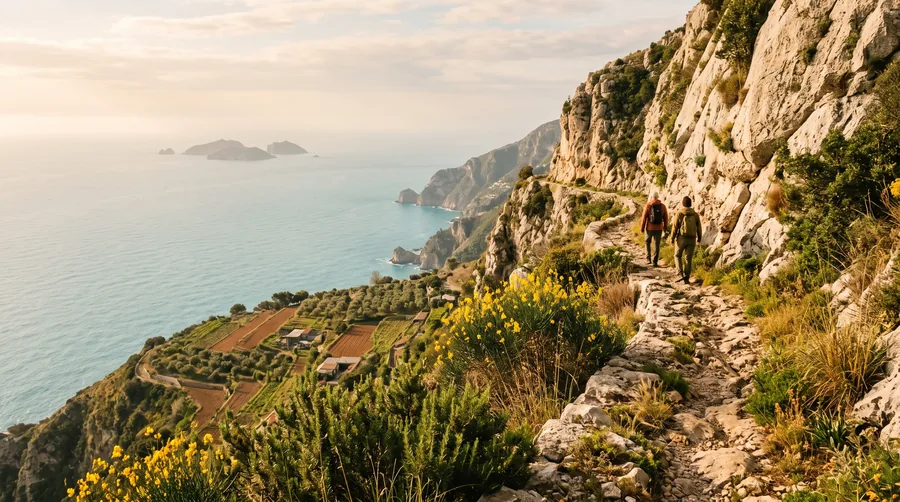
Choose your accommodation according to its connections. Amalfi has the most bus and ferry links, Positano and Minori have ferry piers, and you reach Ravello by bus or taxi. The article Positano, Amalfi or Ravello helps with the choice. Plan excursions so that you travel one way by bus and back by ferry, and you will see the coast from both sides. For the hike on the Sentiero degli Dei this is ideal, because start and finish lie far apart.
Outside the months of June to September everything is more relaxed: the roads are emptier, and the Travelmar ferries keep running. Which months are suitable is shown by the best time to travel tool; everything else about the region can be found on the Amalfi Coast page.