Three ways to get onto the water
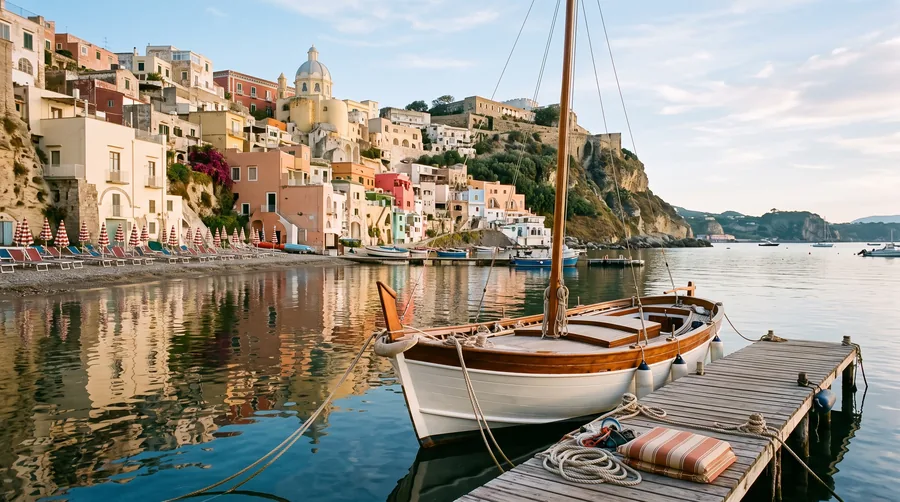
From the sea, the Amalfi Coast shows how steeply it is built: houses, churches and lemon groves are stacked above narrow beaches, with grottoes and bays opening up in between that remain invisible from the road. For a day on the water there are three ways, which differ markedly in price, freedom and planning.
The scheduled ferry is the simplest way to see the coast from the sea. According to its timetable, Travelmar runs all year round between Salerno, Vietri sul Mare, Cetara, Maiori, Minori, Amalfi and Positano; the crossing from Amalfi to Positano takes about 25 minutes. The company also offers a day trip based on this: from Salerno to Positano, after about three hours there on to Amalfi, and back in the evening. There are no swimming stops, but the trip is easy to plan and comparatively inexpensive. Other companies link Positano and Amalfi with Sorrento and Capri.
The shared tour is a boat trip with a fixed programme that you book together with other guests. Typical are trips along the coast with swimming stops, a halt at the Grotta dello Smeraldo and time ashore in Amalfi or Positano. You pay per person but share the boat and follow the schedule.
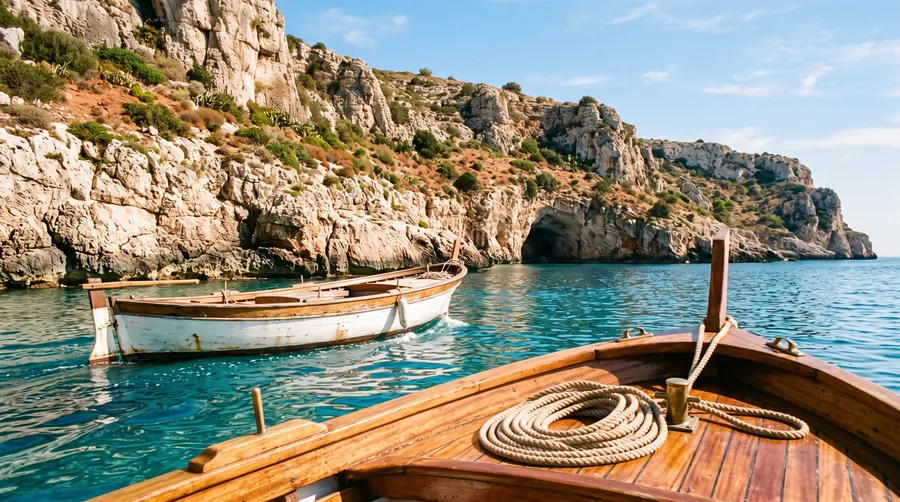
The private boat you charter with a skipper for half a day or a whole day. You agree the route, swimming bays and breaks yourself. Besides motorboats, many operators also have the gozzo in their programme, the traditional wooden boat of the area with an open deck. At Lucibello in Positano, for example, gozzi, motorboats and yachts are part of the fleet, and for larger groups there is a vessel for up to 40 people. According to the operator, you can also rent small inflatable boats of up to 40 hp there without a boating licence; even so, without experience on the water a skipper is advisable.
What you see from the water
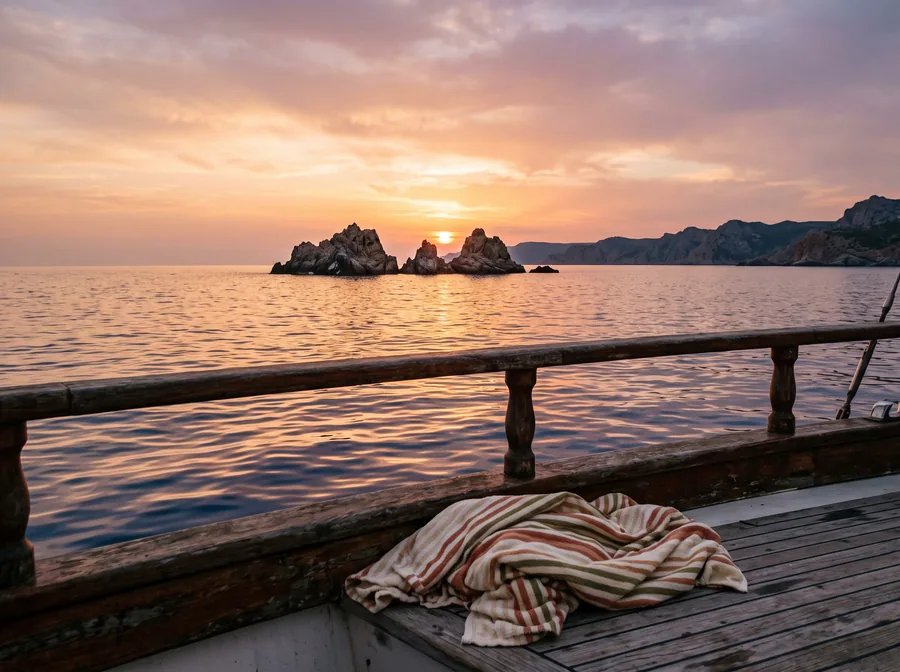
Positano and the Li Galli islands. Off Positano lie three small islands, Gallo Lungo, La Castelluccia and La Rotonda. According to legend, the sirens who tried to seduce Odysseus with their singing lived here. The islands are privately owned, and landing is not planned for excursion guests. The waters belong to the Punta Campanella marine protected area: the zone around the islands is designated a general protected area, the shoal to the west of them a full-protection zone, where particularly strict rules apply.
The Fiordo di Furore. Between Praiano and Conca dei Marini a narrow gorge cuts deep into the rock, and the coastal road spans it on an arched bridge. From the boat you can see how narrow the cleft is and how high the walls rise. Whether the small beach at the bottom of the gorge is accessible is decided by the municipality depending on the danger of falling rocks; in recent years it was closed at times.
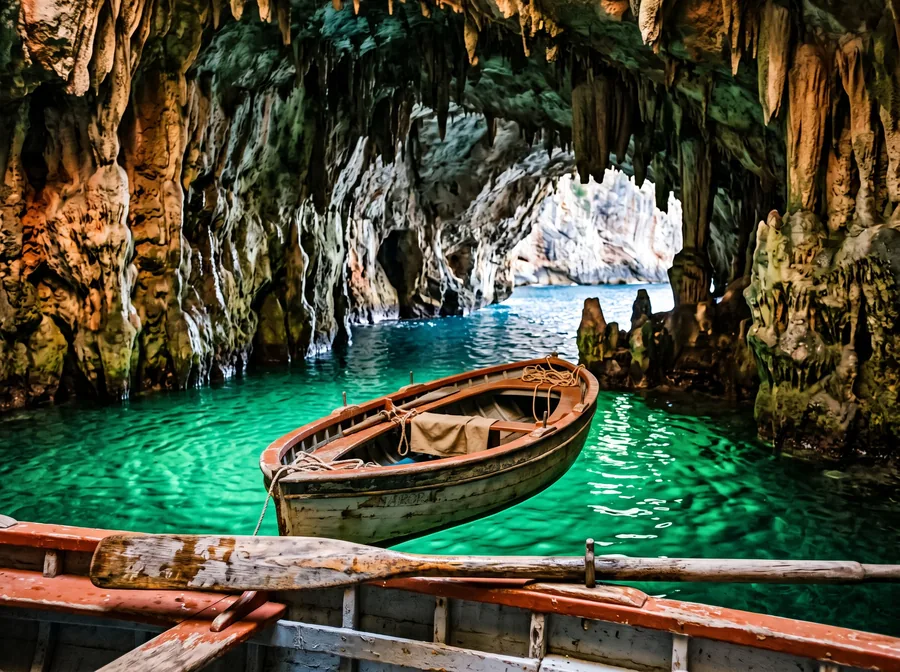
The Grotta dello Smeraldo. The grotto near Conca dei Marini was discovered in 1932 by the fisherman Luigi Buonocore. Light enters through a gap below the surface and colours the water emerald green, while stalactites form columns. Since 1956 a ceramic nativity scene has stood on the bottom. You enter the grotto in a rowing boat; according to operators the visit lasts about 20 minutes and costs extra, and at peak times you have to wait. According to Italy’s national tourism portal, the grotto is open daily from 9 to 14:40 (as of October 2026); check the times before your trip all the same.
Added to this are the townscapes of Amalfi and Atrani seen from the sea, watchtowers from the 16th century on the headlands that once warned of attacks from the sea, and small bays that are best reached from the water.
Shared tour or private boat: what matters
- Departure point: Most tours start in Positano, Amalfi or Salerno; private operators will sometimes pick you up in other harbours too.
- Duration and time ashore: Full-day tours often leave several hours in Amalfi or Positano. If you mainly want to swim, choose a half-day tour with more stops in the water.
- What is included: Clarify whether fuel, drinks, towels and snorkelling equipment are included, and whether entrance fees such as the rowing boat in the Grotta dello Smeraldo cost extra.
- Food on board: Some operators do not allow food brought on board and instead organise a picnic or reserve a restaurant by the water.
- Booking: In high season boats are taken early. At Lucibello, for example, online bookings require a lead time of at least three days.
- Cancellation: Ask in advance what happens in bad weather, and whether there is a replacement date, a refund or a voucher.
Safety on board
A reputable operator has life-saving equipment for adults and children on board and shows you where it is kept before departure. With small children, ask for suitable life jackets. Swimming is allowed only where the skipper gives the go-ahead, and never near ferry landing stages. If you are prone to seasickness, remember a remedy for nausea; Lucibello also expressly points this out.
If you steer a boat yourself, the rules of the marine protected area and the local harbour authorities apply: keep your distance from bathing zones, travel slowly near the coast and do not anchor in protected areas. Have the rules explained to you at handover. In emergencies at sea, the Italian coast guard can be reached on 1530.
Weather and season
The boating season on the Amalfi Coast runs mainly from spring to autumn. For swimming, the sea is most pleasant in summer: the average water temperature is around 26 degrees Celsius in July and August, around 24 to 25 degrees in June and September, around 21 to 22 degrees in October and around 19 degrees in May.
What matters is the swell. In wind and waves, skippers change the route, shorten the trip or cancel, and ferries can be cancelled too. Visits to the Grotta dello Smeraldo can also be cancelled in rough seas. So keep a spare day free for a boat day, especially in spring and autumn.
Planning your boat day well
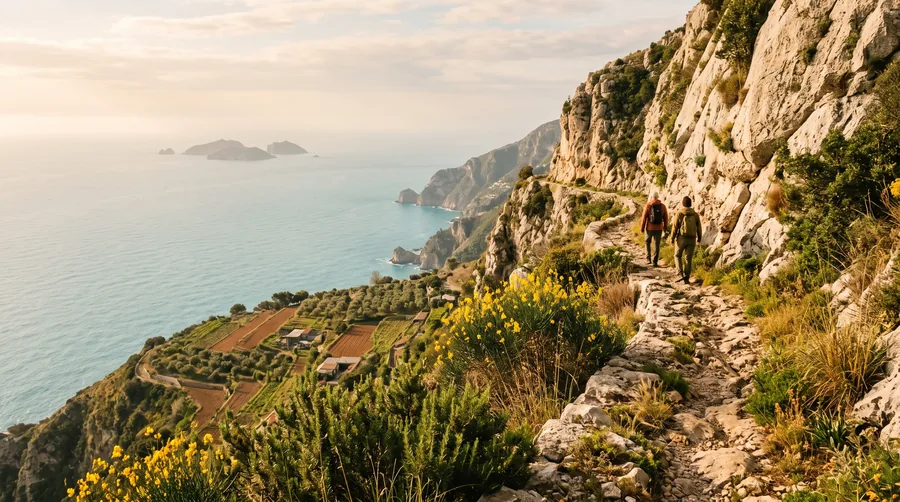
Combine water and land: for example by bus to Amalfi, by boat to Positano and back by ferry in the evening. If you walked the Sentiero degli Dei the day before, you will see the slopes from the sea with different eyes. Pack sun protection, a hat, swimwear, a light jacket for the return trip and some cash for the rowing boat in the grotto. How to reach the harbours without a car is explained in the article The Amalfi Coast without a hire car; you will find an overview of villages and the best time to travel on the Amalfi Coast page.