For many travellers, a cooking class is one of the loveliest ways to get to know Italy: standing at the worktable, kneading dough, learning the names of the herbs and, at the end, eating what you have cooked yourself. The offer ranges from an afternoon on a farm to a cooking school in the old town, and quality varies widely. A few questions before you book will tell you whether a class lives up to its promise.
Four kinds of class at a glance
Most classes fall into one of four types. They differ in atmosphere, group size and price.
| Type of class | Typical setting | Strengths | What to look out for |
|---|---|---|---|
| Agriturismo or country estate | A farm kitchen, often with a garden, olive grove or vineyard | Ingredients from the farm, rustic dishes, lunch on the terrace | Getting there without a car is often difficult; check the language of the class in advance |
| City cooking school | A teaching kitchen with several workstations | Easy to reach, fixed dates, often several languages | Group size, how much of the work is your own |
| Private chef | Your holiday apartment or villa | Tailored entirely to your group and your wishes | Kitchen equipment, who buys and pays for the ingredients |
| Market tour with cooking | To the market in the morning, then into the kitchen | See seasonal ingredients, learn the terms | Market days and public holidays; the class runs into the afternoon |
If you are staying at an Agriturismo, you will often find the class right on the premises; our article Agriturismo or boutique hotel helps you decide which kind of accommodation suits your trip. For travellers without a car, a cooking school in a city such as Florence, Verona or Salerno is usually easier to reach.

How to recognise a good class
- Small groups: The fewer the participants, the more time you get at your own station. A class near Montepulciano offered through the official Tuscany tourism portal, for example, names two to eight guests. With twenty people, there is little left for each person to do.
- Cooking yourself instead of watching: Ask whether every participant has their own station and does the kneading, chopping and seasoning themselves. A mix of demonstration and hands-on work is normal; a pure demonstration is closer to a show.
- Seasonal ingredients: A good menu follows the season and the market. A class that still prepares a salad of pale tomatoes in October is cooking by rote.
- A clear language: Most classes are taught in Italian or English, other languages are less common. Check in advance which language is used.
- Transparent terms: Duration, number of dishes, meal, wine, recipes to take home and transfer should be settled before you book. According to its listing, the class near Montepulciano mentioned above lasts about five hours, ends with a five-course menu and costs from 243 euros, transfer not included (as of October 2026).
- Fair cancellation terms: Especially for classes outdoors or at the market, it is worth checking how long you can cancel free of charge.
Allergies, intolerances and diets
Tell your host about allergies, intolerances and diets in writing when you book, not only at the stove. In the European Union, the Food Information to Consumers Regulation specifies 14 groups of allergens that must be declared, among them cereals containing gluten, eggs, milk, tree nuts, fish, crustaceans and celery. A cooking class is not a restaurant with an allergen menu, though: in a shared kitchen, flour, nuts and milk are often handled on the same surface. So ask specifically how the host avoids cross-contact, and decide for yourself whether that is enough for you.
Useful phrases: “Sono allergico” or “Sono allergica a …” (I am allergic to …), “senza glutine” (gluten-free), “sono vegetariano” or “vegetariana”, “senza lattosio” (lactose-free). Many classics can be adapted. Some pasta needs no egg, and vegetable-based sauces do not need meat.
Tuscany: pici, olive oil and country cooking
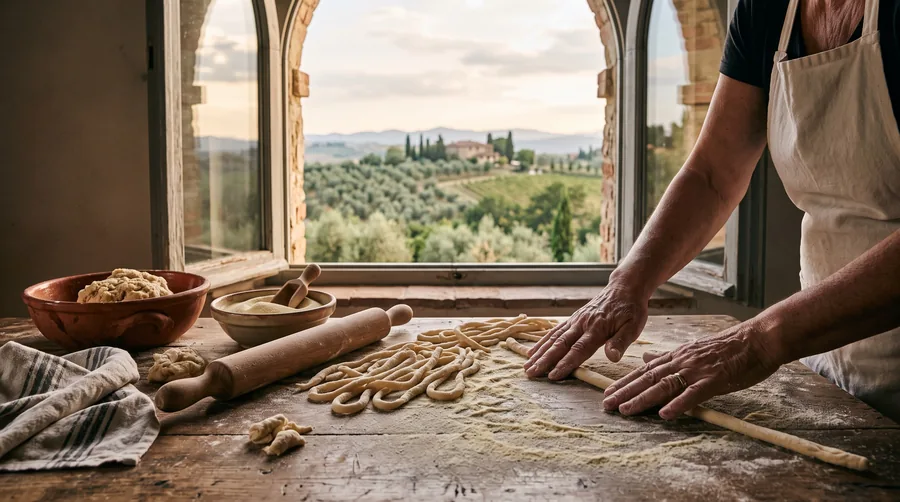
In Tuscany, many classes put fresh pasta at the centre. Typical of the south of the province of Siena are pici, thick hand-rolled noodles. The region’s tourism portal describes them as strands of flour and water that link the villages of the Val d’Orcia, from Pienza and Montepulciano to Montalcino; the dough needs no eggs. If you stop there, the article Val d’Orcia: Pienza, Montalcino and Bagno Vignoni suggests suitable places.
Many classes take place on estates that also produce wine or olive oil, and then a tasting is often part of the programme. If you would like to combine cooking and an overnight stay, the article Wine estate with overnight stay offers tips on choosing. In autumn, it is worth asking whether the class falls in the olive harvest.
Lake Garda: fish, oil and tortellini
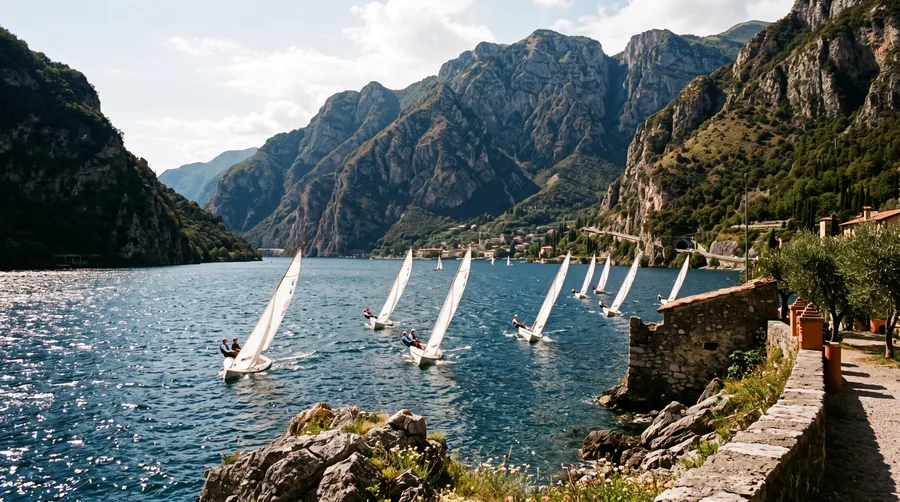
On Lake Garda, three regions meet: Lombardy to the west, Veneto to the east and Trentino to the north. The cuisine is correspondingly varied. Classes often deal with fish from the lake, with risotto and with the olive oil of the area; background is provided by the article Olive oil, Lugana and Bardolino.
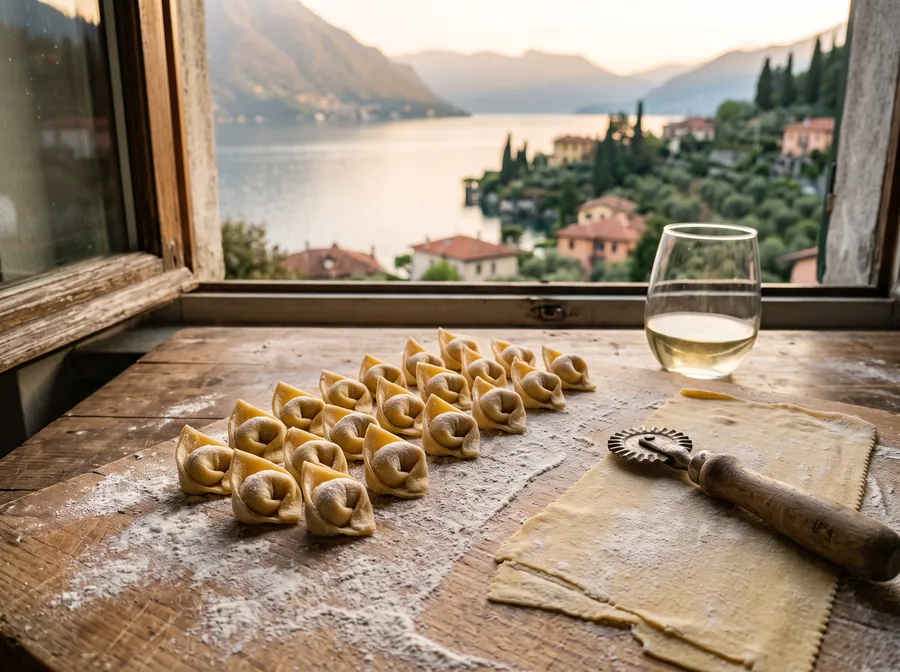
A few kilometres south of the lake lies Valeggio sul Mincio, known for its tortellini, which are called Nodo d’amore there, love knots. The Touring Club Italiano describes a restaurant in the town where six pasta makers, the sfogline, roll the egg dough out very thin and shape the tortellini fresh twice a day. If you want to learn the folding, ask specifically about classes for filled pasta.
Amalfi Coast: lemons, anchovies and terrace cooking
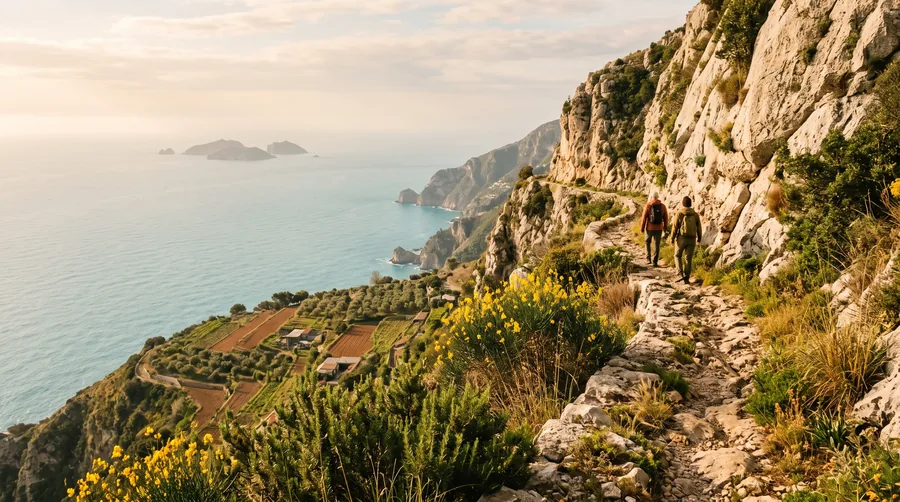
On the Amalfi Coast, many classes cook with what grows on the slopes and comes from the sea. The coast’s lemons play a big part, from pasta to dessert; more on this in the article The lemons of the Amalfi Coast. From the fishing village of Cetara comes colatura di alici, a seasoning liquid made from salted, matured anchovies, which has been registered in the EU as a protected designation of origin since 2020. A few drops season an entire plate of spaghetti.
A practical point: many houses stand on steep slopes and can often only be reached by steps. Settle how you get there and back, especially if you are travelling without a rental car; the article The Amalfi Coast without a rental car helps with planning.
Checklist before you book
- What is the maximum number of participants?
- Does everyone cook for themselves, and how many dishes are made?
- In which language is the class taught?
- Which ingredients are in season or come from the host’s own farm?
- What is included in the price: meal, drinks, recipes, transfer?
- How does the host deal with allergies and intolerances?
- Until when can you cancel free of charge?
If you get these questions answered before you pay, you can compare offers and will hardly meet any surprises at the stove.