First the region, then the house
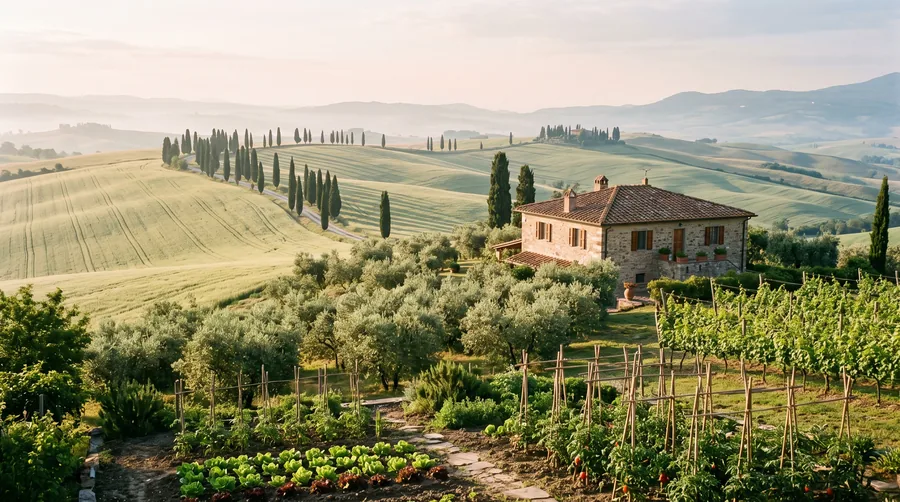
Tuscany does not have one wine country but many. For a trip with an overnight stay on a wine estate, three regions above all come into question, all of which combine well with cities and countryside. Decide first which wine and which surroundings appeal to you, and only then look for the house.
- Chianti Classico: The growing area between Florence and Siena covers, according to the consortium, 71,800 hectares; the municipalities of Castellina, Gaiole, Greve and Radda in Chianti belong to it entirely. If you stay here, you can reach both cities as a day trip. What lies behind Annata, Riserva and Gran Selezione is explained in the article Understanding Chianti Classico.
- Montalcino: Home of Brunello, which is made from Sangiovese and, according to the consortium, matures for at least two years in wood. The estates are scattered around the hill town on the western edge of the Val d’Orcia.
- Montepulciano: Just east of the Val d’Orcia, known for Vino Nobile. Combining it with Pienza and Bagno Vignoni is an obvious choice; more on this in the article The Val d’Orcia at a leisurely pace.
There is also winegrowing on the coast, for example around Bolgheri and in the Maremma. These areas suit travellers who want to combine wine with the sea rather than a round trip through the art cities.
Agriturismo, estate farm or wine resort
Behind the offer “staying on a wine estate” stand different forms. The most common is the Agriturismo: a farm takes in guests, and farming remains the main activity. Tuscany regulates this in its own regional law, which today expressly includes wine tourism as well. Typical are apartments with a kitchen or rooms with breakfast, often a pool, rarely round-the-clock hotel service.
Larger estates, by contrast, run hotels or wine resorts with a restaurant, spa and reception. In between lie historic estate villages such as Castello di Volpaia near Radda in Chianti. It lets rooms, an apartment and two villas in the village as well as rooms in a locanda three kilometres away, and with an osteria, a bakery and a cooking school, almost a small village life of its own comes into being. Which form suits you depends on how independently you travel; the article Agriturismo or boutique hotel offers help with the decision.
How to recognise a good house
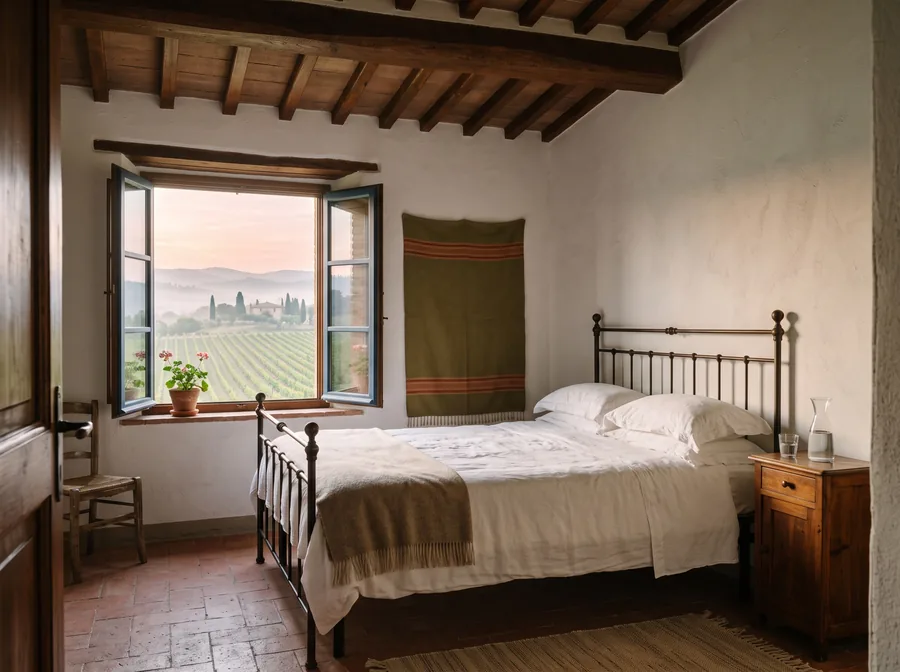
A wine estate’s website reveals a lot if you know what to look for. These points help with the choice:
- Its own production: Are the wines described with names, grape varieties and vineyard sites? Is there olive oil from its own trees, perhaps vinegar or honey?
- Bookable visits: Cellar tour and tasting should be listed with duration, language and price and be easy to book for house guests as well.
- Food on site: A restaurant or a dinner for house guests saves you drives after the tasting.
- Location and access: Check the route on the map. Gravel roads are normal in Chianti and the Val d’Orcia but tiresome after rain.
- Season: Some country accommodations close in winter. If no season is stated on the website, ask.
- Farming methods: If organic cultivation matters to you, you will usually find the relevant details on the website. Castello di Volpaia, for example, gives September 2000 as the start of formal conversion.
- Size: Houses with few rooms or apartments are usually more personal, large resorts offer more service. Both have their place; what matters is what you expect.
Before booking, a short message to the estate with specific questions is worthwhile. Is a tasting included for house guests or charged extra? On which days is dinner served, and must it be ordered in advance? Is there a minimum stay, and when does the pool open? How far is the nearest village with a restaurant, pharmacy and grocery shop? The answers show not only whether the house suits you but also how it treats its guests.
Tasting without driving
The most important argument for staying overnight is entirely practical. A proper tasting includes several wines, and on winding country roads every glass is one too many. If you sleep on the estate, you schedule the tasting for the late afternoon and afterwards eat in the house or walk to the village. Stick to the Italian blood-alcohol limits, which are zero for novice drivers. For visits to further estates, plan for one person who does not drink, or book a guided tour.
The best way to buy wine is directly from the producer. Ask whether the estate also ships, and there will be room left in your suitcase. Many estates have a shop of their own where, besides wine, you will also find oil and other products.
The right time of year
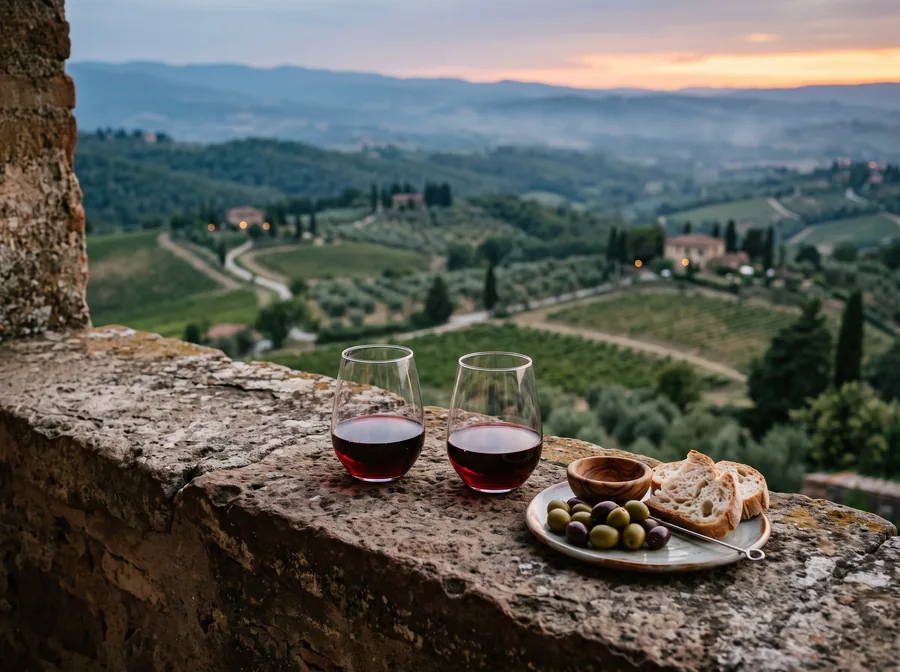
In spring the vines sprout, the hills are green and the days grow mild; in May the average daily high in Florence is just under 24°C. In July and August the afternoons are hot, but the evenings on the terrace are long. In September and October the grapes are picked. The cellar then smells of must, but the estates are also at their busiest; during this time, ask whether tours take place. In late autumn the olive harvest follows: if you stay then on an estate with its own olive trees, you can taste freshly pressed oil, which is green and slightly peppery. In winter some accommodations close, and the days are short.
If you want to combine several wine regions, the route Tuscany in seven days offers one night in Chianti and two nights in the Val d’Orcia.
An example from Chianti Classico
Castello di Volpaia, north of Radda in Chianti, shows how closely wine, village and overnight stay can be connected. The first documents mention Volpaia in 1172, and the cellars lie within the walls of the fortified village. According to its website, the Mascheroni Stianti family farms around 45 hectares of vines at over 400 metres altitude on predominantly sandstone-rich soils and, besides Chianti Classico, produces three wines it calls crus: Coltassala, Il Puro and Balifico. Guests stay in rooms or holiday houses in the village, eat in the osteria and can book a half-day cooking class with Giovanna Stianti. You will find the detailed portrait under Castello di Volpaia.