What an agriturismo is and what it is not
In Tuscany the word appears on countless farm gates, yet it is legally protected. Italian framework law no. 96 of 2006 defines agritourism activities as the hosting and catering of guests by agricultural entrepreneurs who use their own farm for the purpose, in combination with arable farming, forestry or livestock keeping. The details are regulated by the regions. In Tuscany, regional law no. 30 of 23 June 2003 applies; it has been amended several times since and today also covers teaching farms as well as wine and olive oil tourism.
The core has remained the same: hosting guests must be tied to farming and complement it, and farming itself must remain the main activity of the business. Under Tuscan law the designation “agriturismo” is reserved for such businesses. Under the national law, anyone who eats there is served mainly produce from the farm itself, supplemented by products from agricultural businesses in the surrounding area.
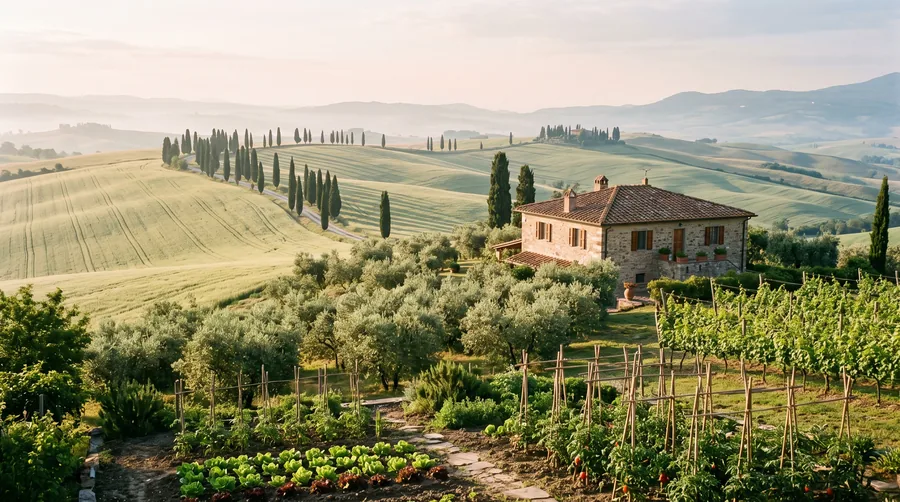
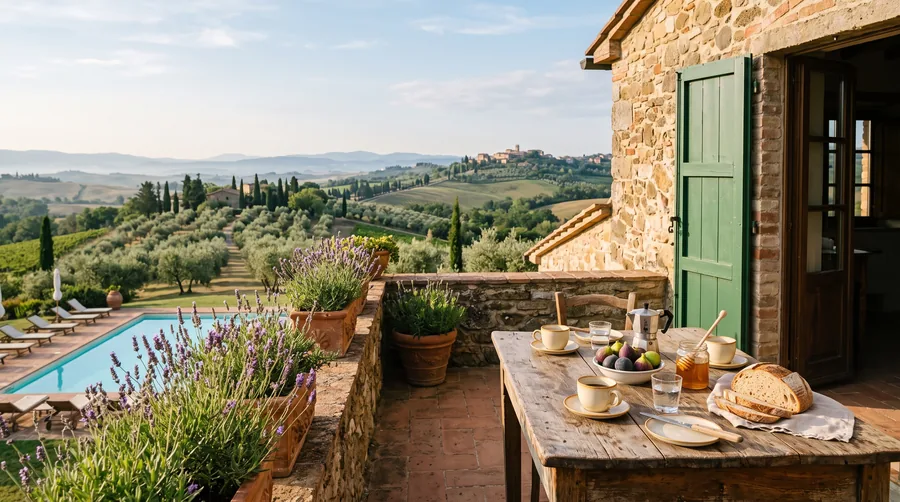
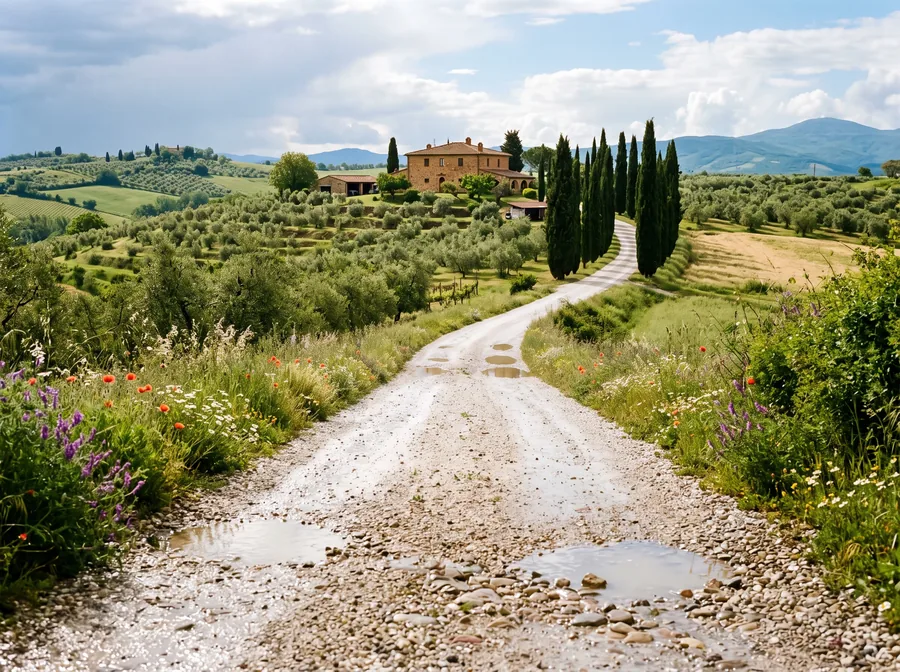
For guests, this means an agriturismo is not a hotel with country-house decoration. You stay on a working farm, often in apartments with a kitchen, sometimes in rooms with breakfast. There is wine, oil, vegetables or cheese from the farm’s own production, often a pool, but rarely a reception desk staffed around the clock. Many farms lie along gravel roads, the strade bianche, and are hard to reach without a car.
What makes a boutique hotel
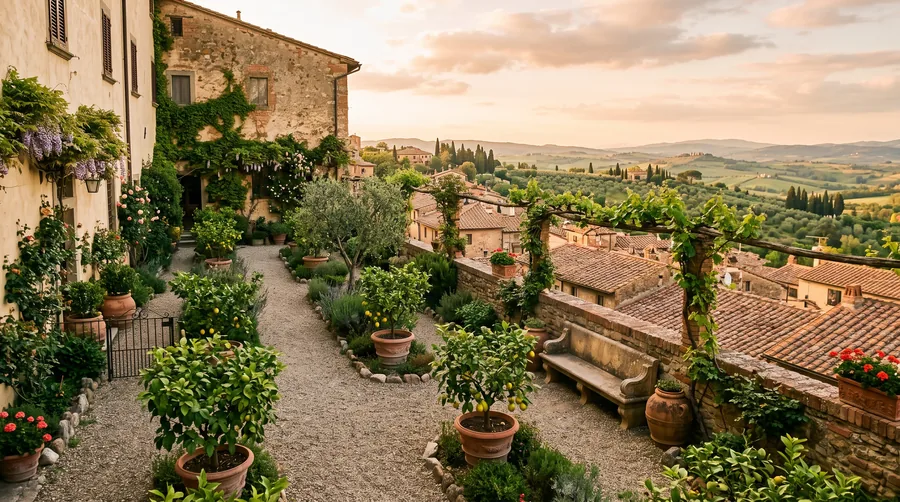
There is no legal definition of a boutique hotel. The term describes small, personally run houses with a character of their own, in Tuscany often in a palazzo in the old town. They offer what a farm rarely provides: a staffed reception, breakfast on the premises, help with reservations, luggage storage and a location from which you can reach museums, restaurants and bars on foot.
One example is the Palazzo Ravizza in Siena, a town palace that has welcomed guests since the 1920s, with a garden, a reception open around the clock and one of the rare hotel car parks inside the city walls. In return, in the city you give up open space and the view over vineyards from the breakfast table, and your car usually stands in a car park on the edge of town.
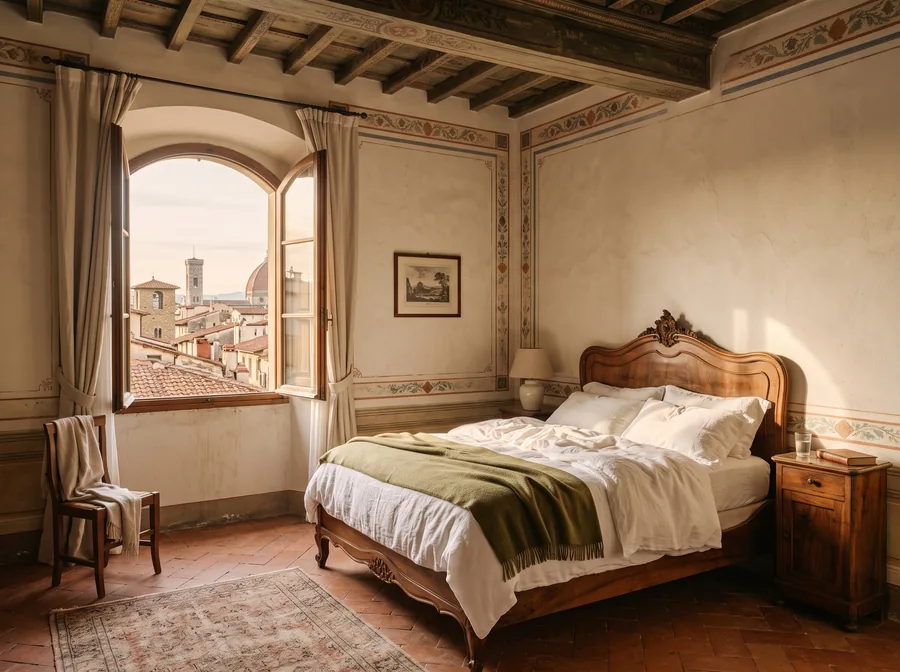
The third way: staying on a wine estate
Between the two forms lie wine estates with guest rooms or holiday apartments. Not a few of them are legally agriturismi as well, but they focus on the cellar, tastings and often a restaurant of their own. The Castello di Volpaia in Chianti Classico, for instance, runs its accommodation as an agriturismo, rents out rooms, an apartment and villas in a fortified village, operates an osteria and offers cooking courses. For travellers whose trip centres on wine, this is often the most convenient solution, since nobody has to drive after the tasting. More on this in the article Wine estate with overnight stay.
Deciding by type of trip
Six questions usually settle the choice quickly. The tool on this page weighs your answers and suggests a type of accommodation.
- Car: Without a hire car, almost only city hotels come into question. With a car you are free in the countryside, but you have to drive for every dinner unless the farm cooks itself.
- Length of stay: For one or two nights a hotel is simpler. For apartments in the countryside, check the minimum stay; in high season, weekly bookings are common.
- Evenings: On a farm you sit under the open sky, but far from bars and restaurants. In the city you walk to dinner.
- Travel companions: Families and groups of friends appreciate apartments with a kitchen and space outdoors. Couples on a city break are more comfortable staying in the centre.
- Service: A reception open around the clock, help with luggage and tips for the evening are offered mainly by hotels.
- Season: In high summer, a garden, shade and a pool in the countryside are worth a great deal. In winter the city has more going for it, because some farms close and the evenings get dark early.
The best solution is often a combination
On a round trip you do not have to commit to one type. A split has proved its worth: two or three nights in a small city hotel in Florence or Siena, entirely without a car, followed by a countryside base for the rest of the week, where you really do need the hire car. That way you use the service of the city while you visit museums, and the calm of the countryside when you discover landscape and wine. If you only have one week, it is better to change base once fewer: four nights on a farm in Chianti or in the Val d'Orcia with day trips are more relaxed than four hotels in four nights. Driving times between the areas are usually just under an hour to a little over an hour, so Siena or San Gimignano are also easy to visit as a day destination from the countryside.
What to look for when booking
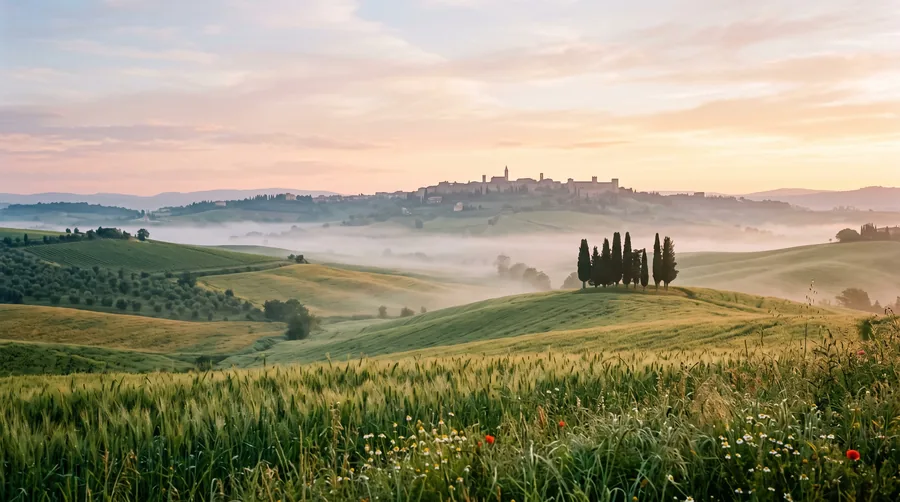
With country accommodation it is worth looking at the map before you book: How long is the gravel approach, and how far is the nearest village with a restaurant and a grocery shop? Ask whether breakfast or dinner is offered, on which days meals are cooked, and whether the pool is open during your travel dates. Some farms close completely in winter.
With a city hotel, the most important question concerns the ZTL, the traffic-restricted zone in historic centres. If the house lies within it, it has to report your number plate, and you need a solution for parking. In Florence the car is superfluous anyway, as the itinerary Tuscany in seven days shows. Also check what is included in the price: in the countryside, final cleaning or heating are sometimes added, and in many cities the municipalities levy an overnight tax, the imposta di soggiorno.
Two examples from Tuscany
The Agriturismo Cretaiole near Pienza shows the rural side: a family rents out eight apartments in an old farmhouse, farms the vegetable garden, vineyard and olive grove organically, and invites guests once a week to a shared pici evening at a long table. According to its website, a programme of shared activities is a fixed part of the booking; anyone looking for seclusion should know this.
The Palazzo Ravizza in Siena stands for the urban side: a historic palazzo, according to the hotel about 400 metres from the cathedral and 500 metres from the Piazza del Campo, with salons, a reading room, a garden and breakfast on the premises. Both houses suit very different trips, and that is precisely the point of the choice: not better or worse, but the question of how you would like to spend your days. You will find further accommodation in the Hotels section and through the accommodation finder.