Why the valley is a World Heritage Site
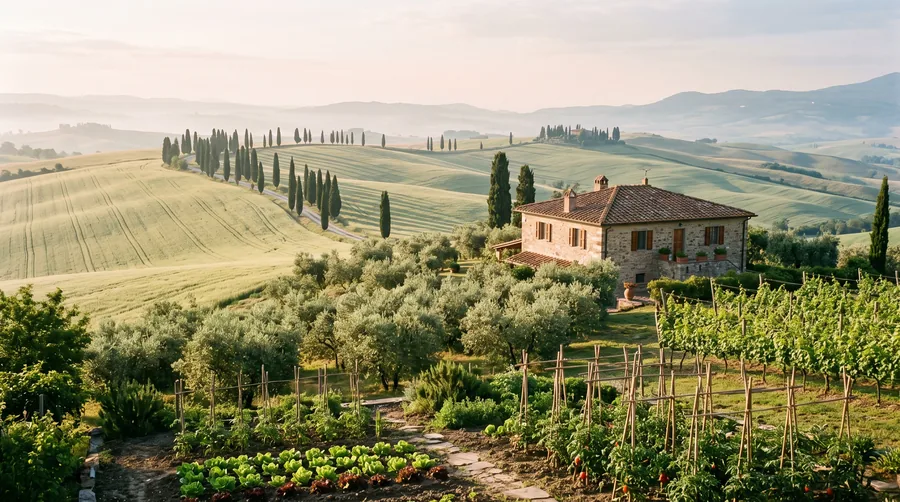
The Val d’Orcia is not untouched nature but a designed landscape. When Siena incorporated the valley into its territory in the 14th and 15th centuries, merchants invested in agriculture, farms and fortified villages; the result was meant to make good government visible and, at the same time, to look beautiful. That is how UNESCO describes it, and it inscribed the valley as a cultural landscape in 2004. According to the World Heritage Centre, the protected area covers 61,188 hectares, and its boundaries match those of the Val d’Orcia Park, which the municipalities of Montalcino, Pienza, San Quirico d’Orcia, Castiglione d’Orcia and Radicofani manage together.
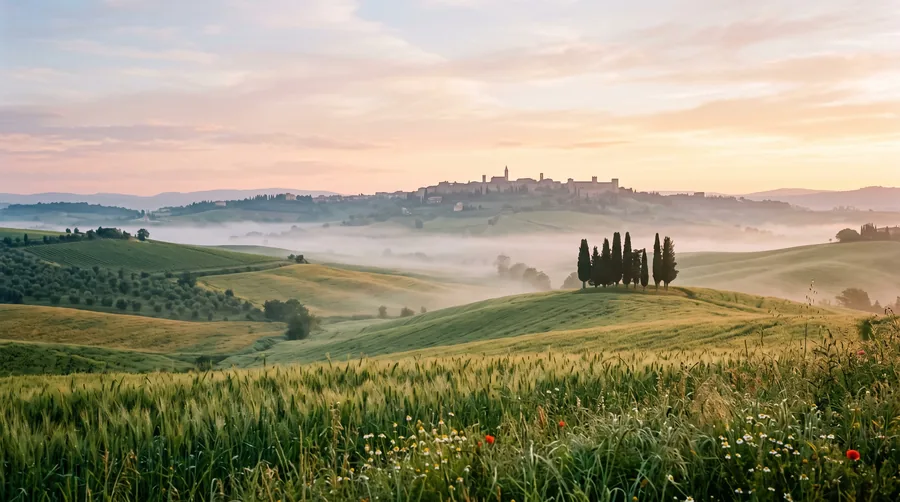
Typical are flat chalky plains from which almost conical hills with villages rise, along with groups and avenues of cypresses that mark farms and paths. The painters of the Sienese school captured this order in their pictures, and the old pilgrim road Via Francigena runs through the valley, with abbeys, hostels and bridges. If you want to experience the valley at a leisurely pace, do not treat it as a backdrop: the fields are working land, and many drives to farms are private.
Lies just east of the park and is the destination on the morning of the first day. The Vino Nobile comes from Montepulciano, close by.
From 1459, Pope Pius II had his birthplace remodelled into an ideal Renaissance city; its heart is Piazza Pio II. Come in the early evening, when the coach groups have left, and stay for the view over the valley.
Hill town with a fortress on the western edge of the valley and home of Brunello di Montalcino. Book tastings at the wine estates in advance, or taste in an enoteca in town and go on foot.
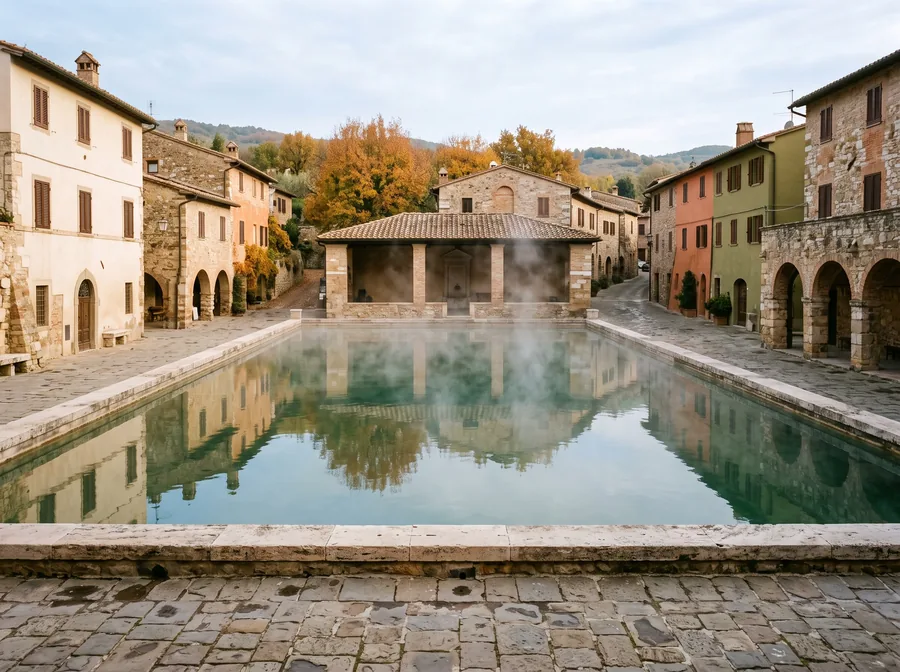
The centre of the hamlet is a large thermal pool, the Piazza delle Sorgenti; the springs are around 49°C. Bathing in the old pool is not allowed; the thermal baths of the hotels in the village offer warm water.
Only a few minutes from Bagno Vignoni on the Via Francigena, good for dinner after the thermal visit. The village suits as a base if you want to walk to dinner in the evening.
Village with a fortress in the south, the destination on the third day after Bagno Vignoni and Rocca d'Orcia with Tentennano Castle.
Pienza: a pope’s ideal city
In the Middle Ages, Pienza was called Corsignano. Enea Silvio Piccolomini, born here and elected pope in 1458, decided in 1459, as Pius II, to remodel his birthplace. The architect Bernardo Rossellino carried out the ideas of his teacher Leon Battista Alberti. According to UNESCO, urban-planning concepts of the Renaissance were realised here for the first time; the historic centre has been a World Heritage Site since 1996.
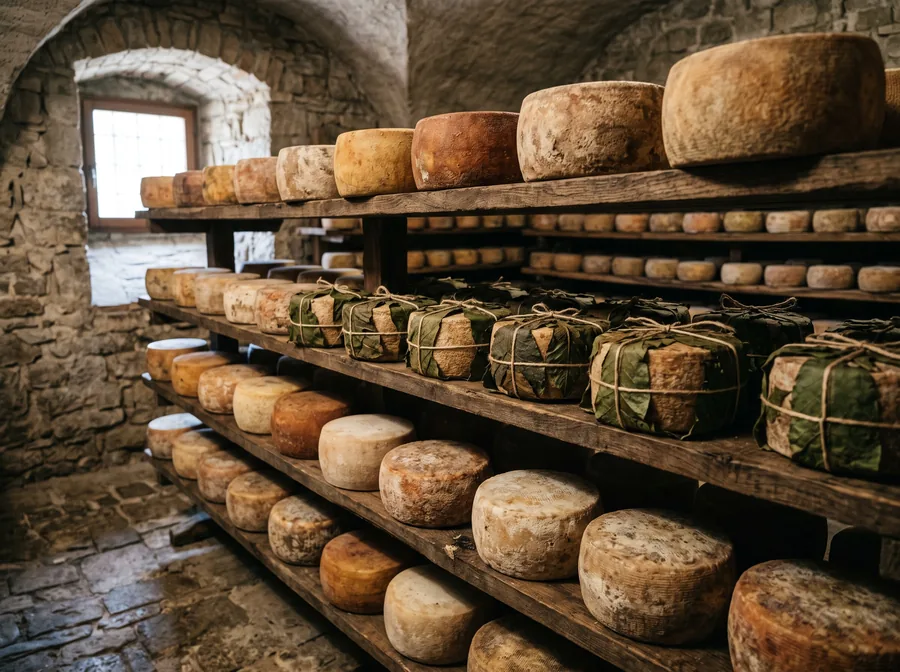
The heart is Piazza Pio II with the Palazzo Piccolomini, the Palazzo Borgia and the cathedral, whose facade is entirely Renaissance while the interior recalls late Gothic churches of southern Germany. Come in the early evening, when the coach groups have left, and then walk along the edge of the old town, where the view opens out over the valley. Pienza is also known for its pecorino, which the shops in town sell at various stages of maturity.
Montalcino and Brunello
Montalcino lies on a hill on the western edge of the valley, crowned by its fortress. The town is known for Brunello di Montalcino. According to the consortium, it is made from Sangiovese, which is traditionally called Brunello here, matures for at least two years in wood and at least four months in the bottle, and may be sold only from 1 January of the fifth year after the harvest, the Riserva a year later. The younger Rosso di Montalcino reaches the market as early as 1 September of the following year.
For tastings, book with the wine estates in advance; on many estates, spontaneous visits are not provided for. Plan the tasting so that you do not have far to drive afterwards, or taste in an enoteca in town and go on foot. From Montalcino, a detour to the Romanesque abbey of Sant’Antimo below Castelnuovo dell’Abate is worthwhile.
Besides Brunello and the Vino Nobile from nearby Montepulciano, the valley has a smaller designation of origin, the Orcia DOC. Its wines often come from family businesses that produce only small quantities and are rarely found outside the area; some farms in the valley offer their own tastings. Pici, thick hand-rolled noodles, belong on the table here, and you will find them on many menus with ragù, garlic and tomato sauce or breadcrumbs. If you would like to roll them yourself, you will find classes in the valley, for example at the Agriturismo Cretaiole.
Bagno Vignoni and San Quirico d’Orcia
Bagno Vignoni is a hamlet of the municipality of San Quirico d’Orcia whose centre is not a square in the usual sense but a large thermal pool, the Piazza delle Sorgenti. According to the regional tourism portal, the springs are around 49°C; the Romans already valued them, and in the Middle Ages Catherine of Siena and Lorenzo de’ Medici stayed here. Bathing in the old pool is no longer possible. If you want to get into warm water, use the thermal baths of the hotels in the village.
Below the square lies the Parco dei Mulini. There, four mills, some built into the rock, used the drop between the spring and the Orcia; thanks to the warm, evenly flowing water, they ran even in summer. The mills are mentioned in a document as early as 1207. Nearby San Quirico d’Orcia is only a few minutes away; the village lies on the Via Francigena and is well suited for dinner after the thermal visit.
Two or three days: an unhurried plan
Distances in the valley are short, but the roads are winding. Divide the villages by compass direction and keep the midday hours free for lunch and a rest.
- Day 1, east: In the morning Montepulciano, just east of the park, at midday the village of Monticchiello, in the late afternoon Pienza with the view over the valley at sunset.
- Day 2, west: In the morning Montalcino with the fortress and a booked tasting, in the afternoon the abbey of Sant’Antimo, in the evening dinner in San Quirico d’Orcia.
- Day 3, south: Early to Bagno Vignoni; on cool mornings the pool visibly steams. Then Rocca d’Orcia with Tentennano Castle and Radicofani with its fortress.
If you have only one day, combine Pienza in the morning with Bagno Vignoni in the afternoon; the two villages are only a few kilometres apart. At well-known photo motifs such as the chapel of the Madonna di Vitaleta, park only in designated places and stay on the paths, because the surrounding fields are farmed.
When to travel, where to stay
In spring the cereal fields are green; in high summer they are harvested and the hills turn straw yellow. In September and October the grapes are picked, and the light grows softer. At midday it can get very hot in summer; the loveliest hours for walks and photos are early morning and evening.
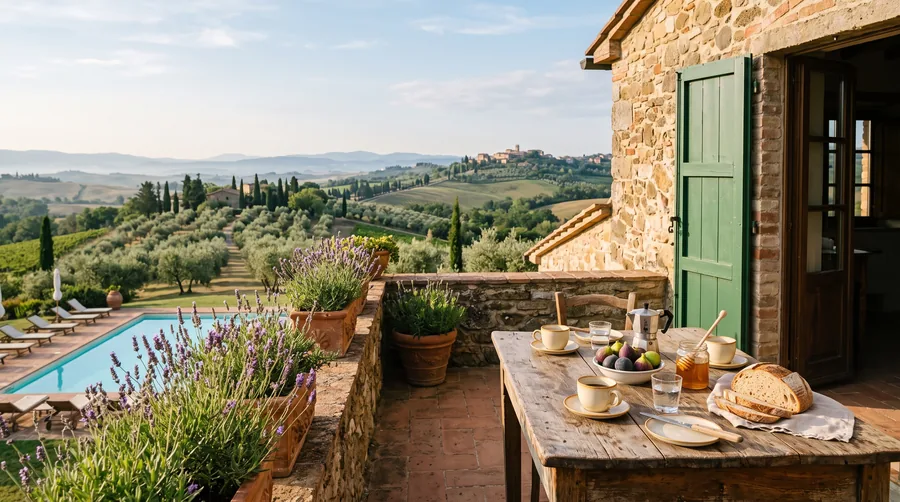
Pienza or San Quirico d’Orcia make good bases if you want to walk to dinner in the evening, or a farm in the surrounding area if you want peace and are travelling by car anyway. The Agriturismo Cretaiole, for example, lies on State Road 146 a few minutes’ drive from Pienza and rents out apartments for self-catering. How the Val d’Orcia fits into a round trip is shown by Tuscany in seven days; if you want to put wine at the centre, you will find tips in the article Wine estate with overnight stay.