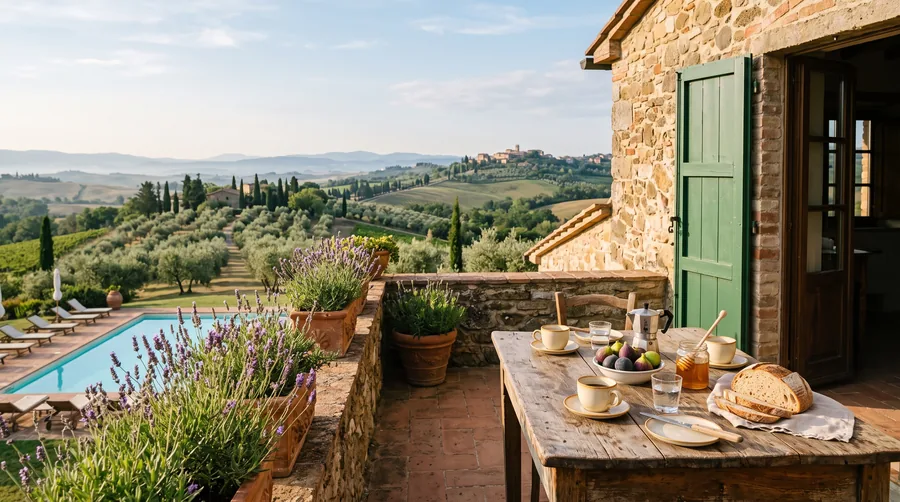
The route at a glance
A week in Tuscany rarely fails for lack of sights, but because of too many hotel changes and stages that are too long. This route therefore relies on five bases that lie close together: two nights in Florence without a car, one night each in San Gimignano, in Chianti and in Siena, and finally two nights in the Val d’Orcia. On the eighth morning you head back to the airport. The individual stages take from just under to a little over an hour, so every change of place is done by lunchtime and the afternoon belongs to your destination.
| Nights | Base | Getting there | Focus |
|---|---|---|---|
| 1 and 2 | Florence | Tram T2 from the airport, about 20 minutes | Old town, museums, Oltrarno |
| 3 | San Gimignano | A little over an hour from Florence airport | Towers, evening atmosphere |
| 4 | Radda in Chianti | Around an hour on country roads | Wine estates, tasting |
| 5 | Siena | Under an hour | Piazza del Campo, cathedral |
| 6 and 7 | Pienza in the Val d’Orcia | Around an hour | Pienza, Montalcino, Bagno Vignoni |
The map for this article shows the stages with the calculated road distances. On the country roads, expect many bends, tractors and cyclists, and plan generously: a stage that takes 50 minutes on paper easily takes twice as long with a photo stop and a coffee.
Two days on foot: the cathedral, the Uffizi and the Palazzo Vecchio on the first day, the Palazzo Pitti and the workshops of the Oltrarno on the second. You do not need a car here; tram T2 connects the airport and the centre.
On to San Gimignano: about 59 km, roughly 1 h
Pick up the rental car at Florence airport and arrive in the early afternoon. Once the day visitors have gone, the lanes between the 14 surviving towers are yours.
On to Radda in Chianti: about 40 km, roughly 55 min
Via Castellina into the heart of Chianti Classico, with a booked tasting in the afternoon. Stay overnight on a wine estate so that nobody has to drive afterwards.
On to Siena: about 38 km, roughly 45 min
Leave the car in the car park on the edge of the old town or choose a hotel with its own parking. The Piazza del Campo in the evening, the cathedral and lanes in the morning, before the groups arrive.
On to Pienza (Val d'Orcia): about 68 km, roughly 1 h 15 min
Two days in the Val d’Orcia: Pienza and Montepulciano on one day, Montalcino and Bagno Vignoni on the other. On the day of departure, allow around two hours to Florence airport.
Days 1 and 2: Florence on foot
Florence is a city for your feet. From the airport in Peretola, tram line T2 takes about 20 minutes to Piazza dell’Unità next to Santa Maria Novella station; you do not need a car on these two days. The historic centre has been on UNESCO’s World Heritage List since 1982, and in a small area you find the cathedral, the Uffizi and the Palazzo Vecchio, and on the other side of the Arno the Palazzo Pitti with the Boboli Gardens.
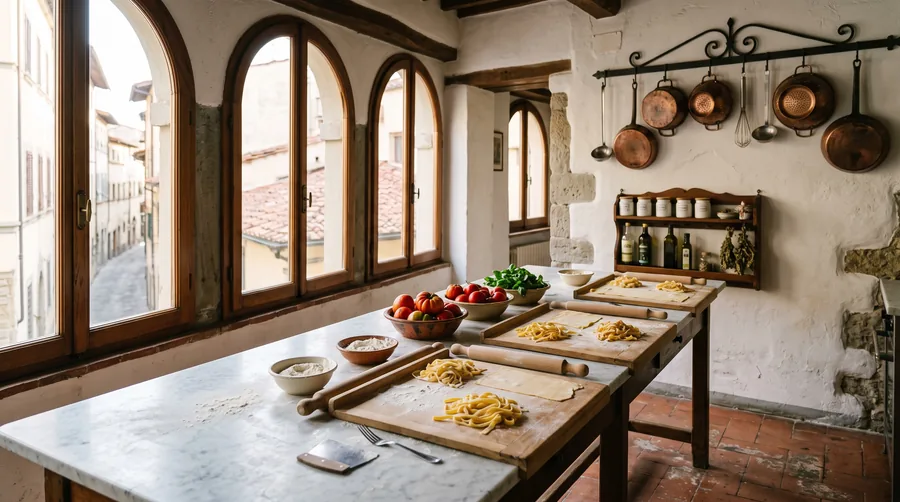
Book time slots for the big museums in advance and spread them over two mornings. You can spend the afternoon of the second day in the Oltrarno, the district around Santo Spirito and San Frediano, where gilders, bookbinders and goldsmiths still work. How to visit workshops there without disturbing anyone is described in the article Florence beyond the museums. If you would like to cook yourself, you will find the cooking school In Tavola in the same district, with classes for pasta and complete menus.
Days 3 and 4: San Gimignano and Chianti
On the third morning, you take the tram back to the airport and pick up the rental car there. There is a solid reason for this: the rental stations are outside the old town, and you are not tempted to drive through the traffic zone. Via the expressway towards Siena, you reach San Gimignano in a little over an hour.
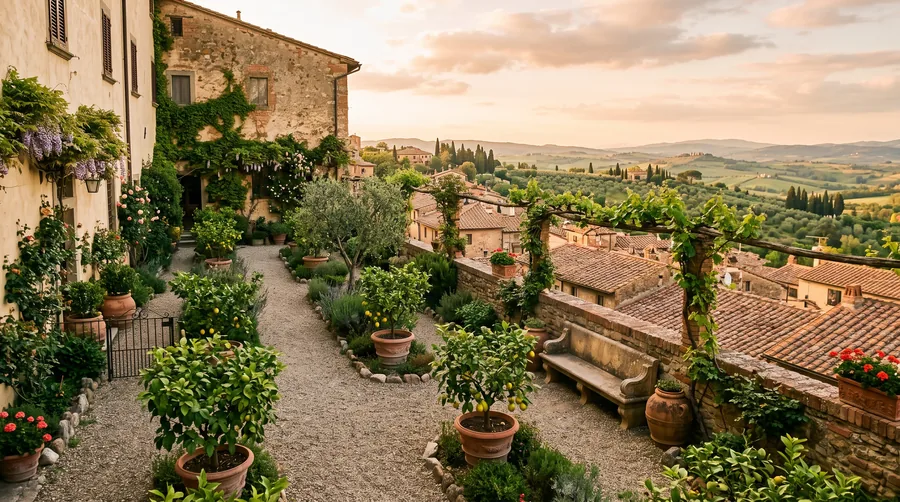
San Gimignano is worth an overnight stay because the lanes empty in the evening, when the day visitors have left. According to UNESCO, the town’s patrician families once built some 72 tower houses, 14 of which survive. Park in the signposted car parks in front of the town wall and check with your accommodation whether you may drive in to unload.
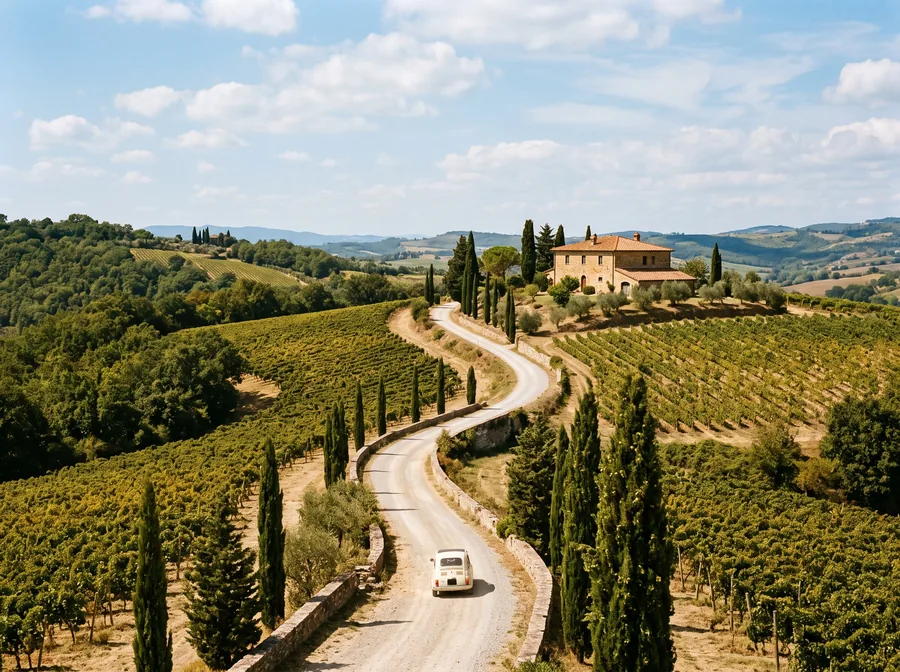
On the fourth day, the stage leads via Castellina to Radda in Chianti, around an hour on winding roads. Here wine takes centre stage: book a tasting for the afternoon and stay overnight on a wine estate so that nobody has to drive afterwards. One example is Castello di Volpaia north of Radda, which lets rooms in the fortified village. What the black rooster on the bottles means is explained in the article Understanding Chianti Classico.
Day 5: one night in Siena
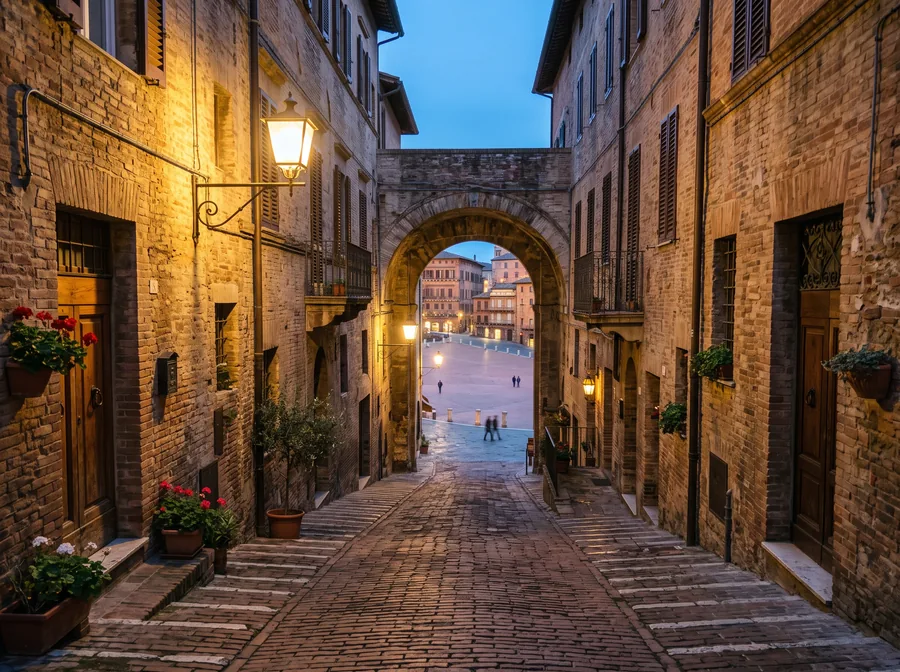
From Radda to Siena you need less than an hour. According to UNESCO, Siena has preserved its Gothic form from the 12th to the 15th century, and the whole city is built around the Piazza del Campo; since 1995 the centre has been a World Heritage Site. One night is enough for the Campo in the evening and the cathedral and lanes early in the morning, before the day groups arrive.
The car stays outside. The old town is a traffic zone, and the entrances are monitored electronically. The municipal parking company Si.Ge.Ri.Co. runs car parks and lots on the edge of the centre, among them Il Campo, Santa Caterina, Stadio-Fortezza and San Francesco; several have escalators up to the upper town. A hotel with its own car park inside the walls is the exception: the Palazzo Ravizza, for example, lets guests drive in only via the Porta San Marco and explicitly advises against following the satnav.
Days 6 and 7: the Val d’Orcia
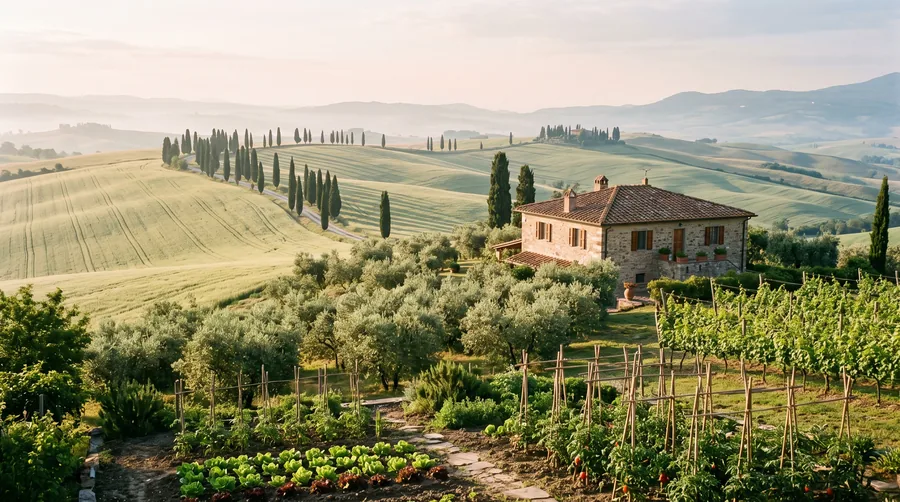
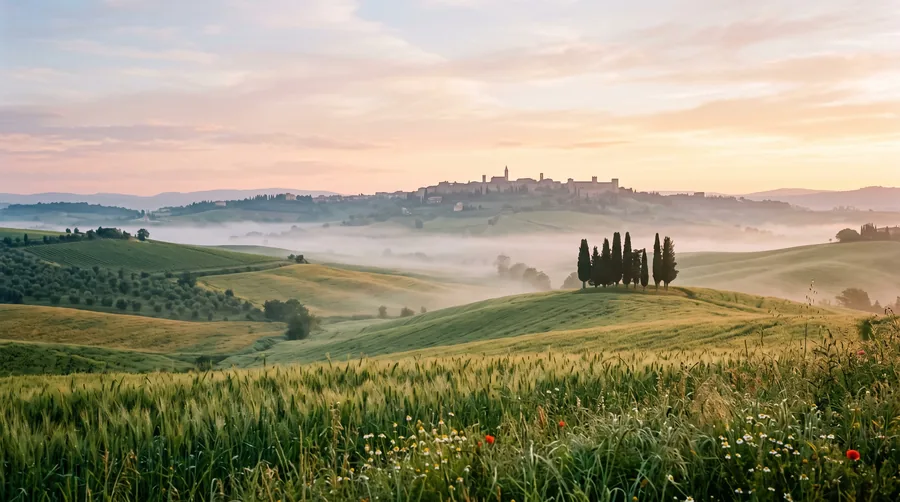
The last stage leads in about an hour south into the Val d’Orcia, which UNESCO inscribed as a cultural landscape in 2004. Pienza or a farm in the surrounding area makes a good base: Montalcino, Montepulciano, San Quirico d’Orcia and Bagno Vignoni are each only a short drive away. A family-run business with apartments is, for example, Agriturismo Cretaiole near Pienza.
Divide the two days by compass direction: one day Pienza and Montepulciano in the east, the other Montalcino with a detour to the warm pool of Bagno Vignoni. Details can be found in the article The Val d’Orcia at a leisurely pace. For the drive back to Florence airport, you should allow around two hours and a buffer for returning the rental car.
ZTL, parking and rental cars: what to settle in advance
The biggest cost trap of a Tuscany road trip is the Zona a traffico limitato, ZTL for short. In Florence, according to the city’s official tourism portal, it applies Monday to Friday from 7:30 am to 8 pm and on Saturday from 7:30 am to 4 pm, not on Sundays and public holidays. From the first Thursday in April to the first Sunday in October, a night zone from 11 pm to 3 am applies on Thursdays to Saturdays as well (as of October 2026). Cameras record the licence plates at the entrances.
- Hotel in the zone: Give your licence plate at reception; the hotel reports it to the city police. Ask before you arrive for the shortest route in and out.
- Only unloading luggage: If you only unload in Florence and do not park at the hotel or in a garage, you may, according to the city portal, stay in the zone for three hours at most. Check this with your accommodation too.
- Parking: Spaces outside the zone are cheaper than garages in the centre. The Florence portal mentions, for example, the Parterre car park at Piazza della Libertà with a bus connection, as well as car parks along the tram lines such as Villa Costanza.
- Rental car: Pick up the car only when you leave Florence, and return it at the airport. A ZTL violation often comes to light only weeks later, when the notice arrives.
Pisa is also a good starting point. From the airport, the People Mover runs to Pisa Centrale station, and from there you take the train to Florence. According to the regional tourism portal, the rental stations in Pisa are around 500 metres from the terminal, in case you want to pick up and return the car there.
When to go and variations
The climate figures for Florence show why spring and autumn are the best choice: in May the average daily high is just under 24°C, in July and August over 31°C (1971 to 2000 average, Peretola station). In September and October, the grape harvest takes place in Chianti and the Val d’Orcia. Some country accommodations close in winter, so check the season when booking. The Travel Time tool shows the months compared.
- Fewer hotel changes: Visit San Gimignano as a day trip and stay two nights in Chianti instead.
- More peace: Drop the night in Siena and go as a day trip from Chianti; Radda is less than an hour away.
- Without a car: You can reach Florence, Siena and Lucca by train and bus. Chianti and the Val d’Orcia, by contrast, open up without a car only with organised tours.
Whether a farm in the countryside or a small city hotel suits your trip is something the article Agriturismo or boutique hotel helps you decide. You will find an overview of the whole region under Tuscany.