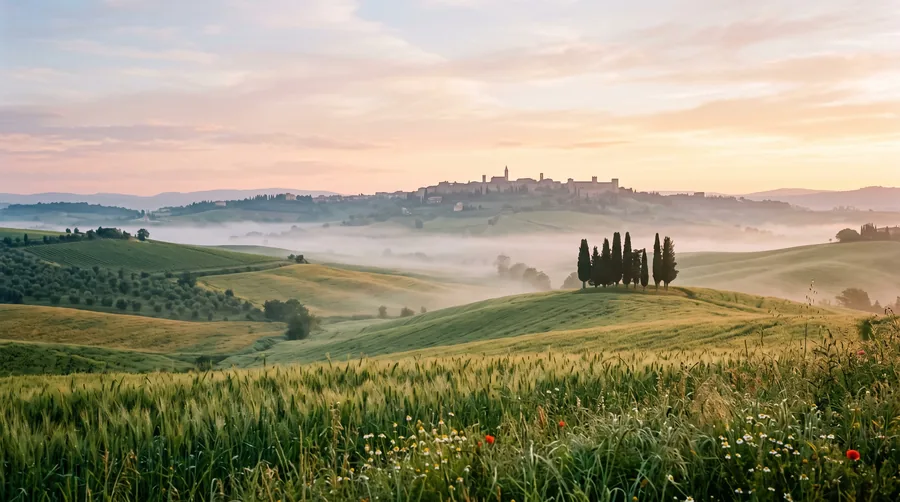
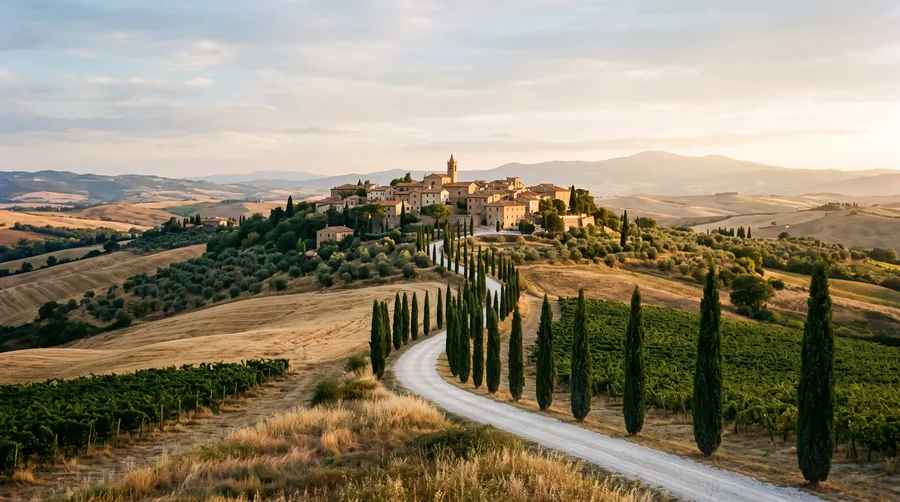
Tuscan hill landscape with a cypress avenue and a village on a hilltop (illustrative image)
Illustrative image

Region · 10 articles · 5 places

Tuscany

Between Florence and Monte Amiata lies a landscape shaped by people over the centuries, with Renaissance cities, wine estates and hill villages. If you want to enjoy it at an unhurried pace, limit yourself to a few bases and leave the car parked in the cities.

Tuscany is large and varied, yet for most travellers it begins with a triangle: Florence in the north, Siena in the middle, the Val d'Orcia in the south. In between lie Chianti with its vineyards and woods, San Gimignano with its towers and a string of hill towns that have kept their medieval or Renaissance character. Several of them are on the UNESCO World Heritage List, among them the historic centres of Florence, Siena, San Gimignano and Pienza, as well as the whole of the Val d'Orcia.

The region divides sensibly into three areas. Florence and Lucca in the north are cities you explore on foot and by train. Chianti, between Florence and Siena, is wine country with winding country roads, wine estates and small towns such as Greve, Panzano, Radda and Castellina. In the south of the province of Siena the Val d'Orcia opens out with Pienza, Montalcino and Bagno Vignoni, and Montepulciano lies on its eastern edge.

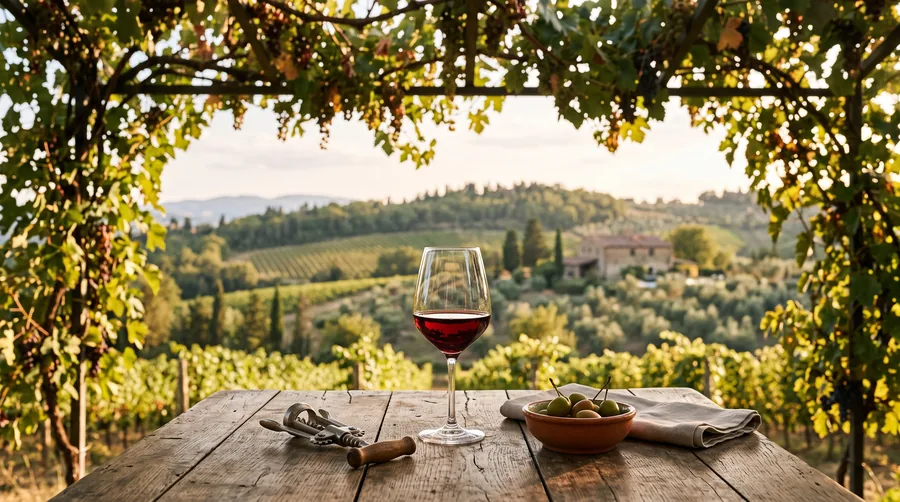
For food and wine lovers, Tuscany is above all a wine region: Chianti Classico, Brunello di Montalcino and Vino Nobile di Montepulciano all come from here, along with olive oil, pecorino and a country cuisine built on a few good ingredients. Many farms welcome guests as an agriturismo, and at numerous wine estates you can stay overnight.

The coast with Versilia, Maremma and the islands is part of Tuscany too, but it is not the focus of this magazine. If you are looking for culture, wine and landscape, plan a week inland and combine one or two cities with two rural bases.
FlorenceFlorence: Renaissance city with the cathedral, the Uffizi and the artisans' district of Oltrarno, best experienced without a car.SienaSiena: Gothic city around Piazza del Campo, a World Heritage Site since 1995, with a traffic-calmed old town.San GimignanoSan Gimignano: Hill town with 14 surviving tower houses, once a stop on the Via Francigena pilgrim route.Greve in ChiantiGreve in Chianti: Market town in Chianti Classico on the Chiantigiana between Florence and Siena.Radda in ChiantiRadda in Chianti: Quiet town in Chianti Classico, where the wine consortium was founded in 1924, surrounded by wine estates.MontalcinoMontalcino: Hill town with a fortress on the western edge of the Val d'Orcia, home of Brunello di Montalcino.PienzaPienza: Ideal Renaissance town remodelled from 1459 for Pope Pius II, known for its pecorino.MontepulcianoMontepulciano: Elongated hill town on the eastern edge of the Val d'Orcia, known for Vino Nobile.Bagno VignoniBagno Vignoni: Hamlet with a thermal pool as its main square; the springs are around 49°C.LuccaLucca: Town in the north-west with walls you can walk along, reachable by train from Florence and Pisa.

Places

Where a stop is worthwhile

  • Florence Renaissance city with the cathedral, the Uffizi and the artisans' district of Oltrarno, best experienced without a car.
  • Siena Gothic city around Piazza del Campo, a World Heritage Site since 1995, with a traffic-calmed old town.
  • San Gimignano Hill town with 14 surviving tower houses, once a stop on the Via Francigena pilgrim route.
  • Greve in Chianti Market town in Chianti Classico on the Chiantigiana between Florence and Siena.
  • Radda in Chianti Quiet town in Chianti Classico, where the wine consortium was founded in 1924, surrounded by wine estates.
  • Montalcino Hill town with a fortress on the western edge of the Val d'Orcia, home of Brunello di Montalcino.
  • Pienza Ideal Renaissance town remodelled from 1459 for Pope Pius II, known for its pecorino.
  • Montepulciano Elongated hill town on the eastern edge of the Val d'Orcia, known for Vino Nobile.
  • Bagno Vignoni Hamlet with a thermal pool as its main square; the springs are around 49°C.
  • Lucca Town in the north-west with walls you can walk along, reachable by train from Florence and Pisa.

When to go

When to visit Tuscany?

Compare regions

The most pleasant months are April to June, as well as September and October. In Florence the average daytime highs are then between about 18 and 28°C. In July and August they climb above 31°C, and the cities are crowded. Winter is mild, with highs around 11°C and cold nights just above freezing; the cities are quieter then, and some rural accommodations are closed.

September and October bring the grape harvest, followed in late autumn by the olive harvest. Easter, the spring holidays and August with Ferragosto on 15 August are among the busiest times. The Best time to travel tool compares the months.

Daytime temperature from low to highCrowds (editorial estimate)Long-term averages, Florence (Peretola weather station). Source: Atlante Climatico d'Italia (Servizio Meteorologico dell'Aeronautica Militare), averages 1971 to 2000 for Florence-Peretola, reproduced in the climate table of the Italian Wikipedia

Choose a month for details.

Trip planning

Travel and regions in Tuscany

All Travel and regions

Where to stay

Hotels and hideaways in Tuscany

All Hotels and hideaways

Agriturismo · Pienza

Agriturismo Cretaiole

Organic family farm near Pienza with eight apartments, a vegetable garden, a vineyard and a weekly pici night.

Hotel · Siena

Hotel Palazzo Ravizza

Historic palazzo in Siena's old town, a guesthouse since the 1920s, with a garden, round-the-clock reception and its own car park.

Food and wine

Food and wine in Tuscany

All Food and wine

Wine estate · Radda in Chianti

Castello di Volpaia

Fortified wine village near Radda in Chianti with organically produced Chianti Classico, rooms, villas, an osteria and a cooking school.

Experiences

Experiences in Tuscany

All Experiences

Experiences

Cooking classes in Italy: how to spot a good one

Agriturismo, cooking school, private chef or market tour: which kind of class suits you, what to ask before you book, and what ends up on the table in Tuscany, on Lake Garda and on the Amalfi Coast.

Cooking school · Florence

In Tavola

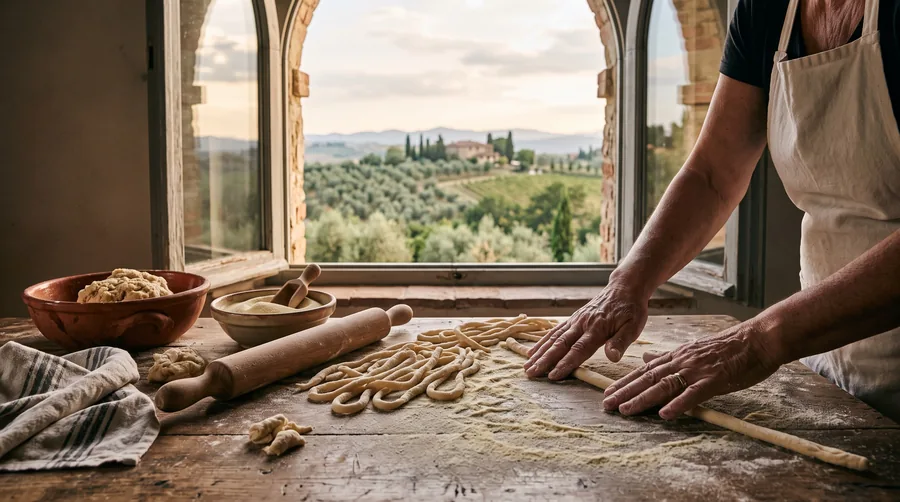
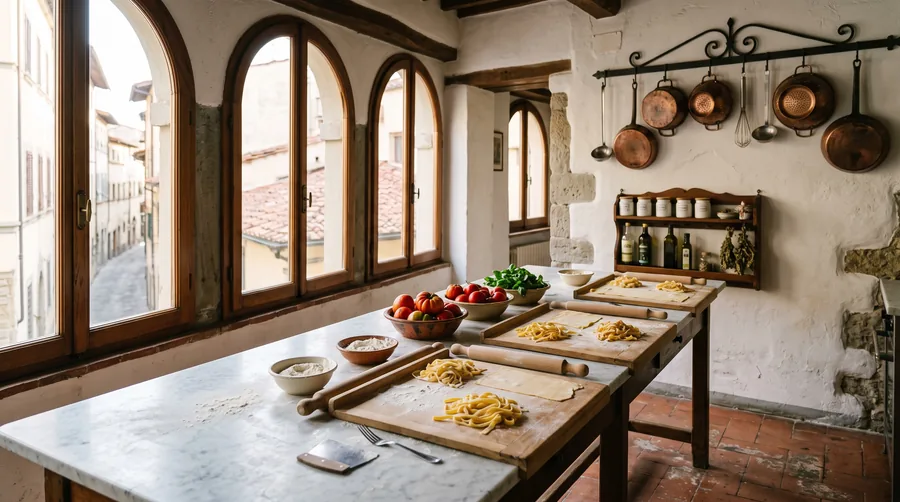
Cooking school in Florence's Oltrarno near Palazzo Pitti: group classes for pasta, set menus, pizza and gelato, plus private lessons.

Way of life

Lifestyle and design in Tuscany

All Lifestyle and design

Lifestyle and design

Caffè in Italy: how to order at the bar

Standing or sitting, pay first or order first, cappuccino in the afternoon: the most important habits of the Italian bar and the words that get you what you want.

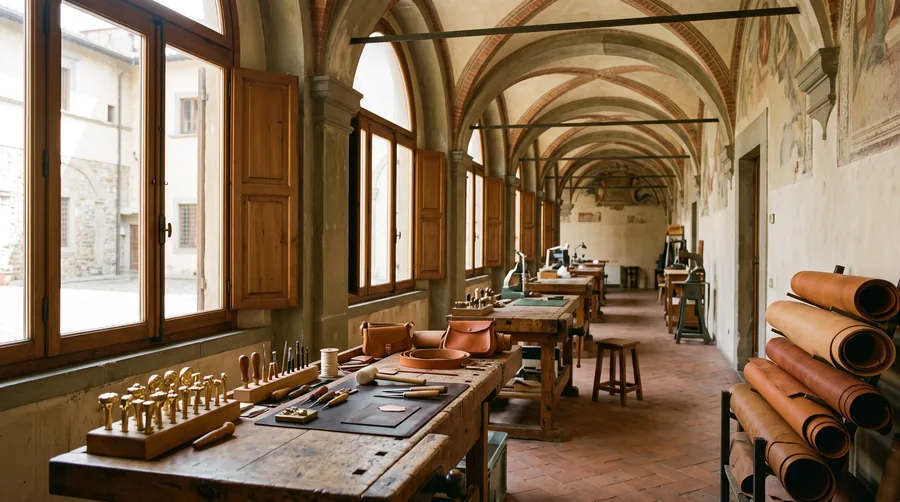
Workshop · Florence

Scuola del Cuoio

Leather school and workshop in the former monastery of Santa Croce, founded after the war, with a shop and courses.

Getting there

The main airports are Florence and Pisa. Florence airport is in Peretola, about four kilometres from the centre; according to the regional tourism portal, tram line T2 takes around 20 minutes to Piazza dell'Unità at Santa Maria Novella station. From Pisa airport, the People Mover takes travellers to Pisa Centrale station, and the car hire stations are about 500 metres from the terminal.

For the cities you do not need a car, for the countryside you almost always do. Pick up your hire car only once you leave Florence: the old towns of Florence and Siena are traffic-restricted zones (ZTL) monitored by cameras, and if you are staying in a hotel inside the zone, your licence plate has to be reported through the accommodation. A route with short stages is described in the article Tuscany in seven days.

Frequently asked questions

How many days do I need for Tuscany?

For Florence, Siena, Chianti and the Val d'Orcia, a week is a good frame if you limit yourself to four or five bases. With ten days there is time for Lucca, Pisa or a detour to the coast.

Do I need a car in Tuscany?

Not for Florence, Siena and Lucca: you can reach the cities by train or bus and explore them on foot. For Chianti and the Val d'Orcia a car is almost indispensable, because farms and villages are scattered.

Is it better to stay in a city or in the countryside?

Ideally both: two to three nights in a city without a car, then one or two bases in the countryside. Which type of accommodation suits you depends on the length of your stay, who is travelling with you and how you like to spend your evenings.

When is Tuscany at its quietest?

From November to February. Some rural accommodations are closed then and the days are short, but the museums in Florence and Siena are much emptier than in summer.

Sources and image credits

Images: AI-generated illustrative images by the editorial team. They show typical scenes, not specific houses or people.

Newsletter

Dolce Vita Inspiration

New articles, places and travel ideas from Italy, roughly once a month by email. You can unsubscribe at any time with a short message.

By subscribing you agree to receive the newsletter. Details in our privacy policy.