
The Italian bar is not a nightclub but the café around the corner: breakfast in the morning, a quick snack at midday, the aperitivo in the evening. Ordering a coffee there sounds simple, but it follows a few habits that many travellers do not know. If you know them, you pay less, wait less and get exactly the drink you want.
Caffè means espresso
If you order “un caffè” in Italy, you get an espresso: a small cup, little liquid, a hazelnut-brown crema on top. Hardly anyone uses the word espresso at the bar, though it is understood all the same. The caffè is drunk in a few sips, usually standing and often straight after it is served. Sugar stands on the counter, and many bars will put a glass of water alongside on request.
You order variations with an addition: ristretto for less water and more strength, lungo for a slightly larger, milder cup, doppio for a double measure, macchiato with a dab of milk foam. If you want a large coffee like at home, order a caffè americano, an espresso lengthened with hot water. Beware of “latte”: the word means milk, and that is exactly what you will get. For the tall glass with plenty of milk and a shot of espresso, order a latte macchiato.
Counter or table: why the price differs
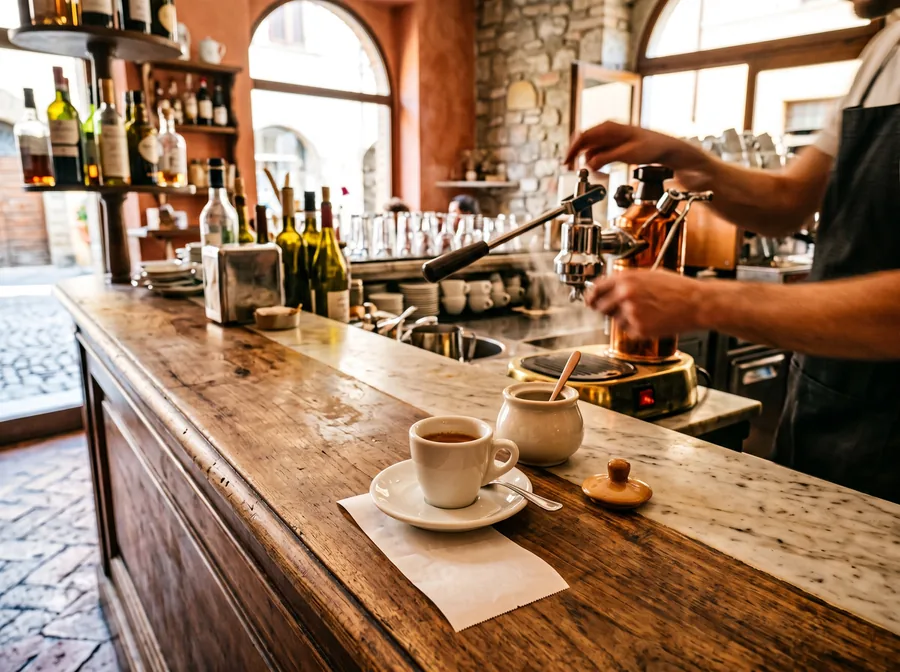
Most Italians drink their caffè at the bar, al banco. It is quicker and cheaper. If you sit at a table and are served, in many bars you pay more, and at spots in prime locations often noticeably more. The surcharge is not a trick but pays for service and a seat. It must, however, be visible: according to the consumer organisation Altroconsumo, prices including any surcharges must be displayed visibly. You can object to an amount that is posted nowhere.
For orientation: according to an analysis of price data from the Italian Ministry of Enterprises and Made in Italy, published by the news agency AGI in March 2025, a caffè in the big cities cost an average of €1.22 in January 2025, compared with €1.03 in 2021. At a table, especially in well-known squares, the price is often considerably higher. So take a look at the price list before you sit down; it usually hangs on the wall or next to the till. If you order at the counter and then want to move to a table with your cup, ask first whether that is allowed; some bars charge the table price for it.
First to the till, then to the counter: the scontrino
In many bars, especially busy ones, you pay first at the till, the cassa. There you say what you would like, pay and receive a receipt, the scontrino. You take it to the counter, place it in front of the barista and repeat your order. Often he tears the receipt slightly or puts a saucer on it; that shows your order has arrived.
In smaller bars it often works the other way round: you order at the counter and pay on leaving. If you are unsure, watch how the guests before you do it, or ask: “Pago prima?” (Do I pay first?). A tip is not expected at the counter. If you leave a few cents of change on the little dish, it is a friendly gesture.
Cappuccino, cornetto and the time of day
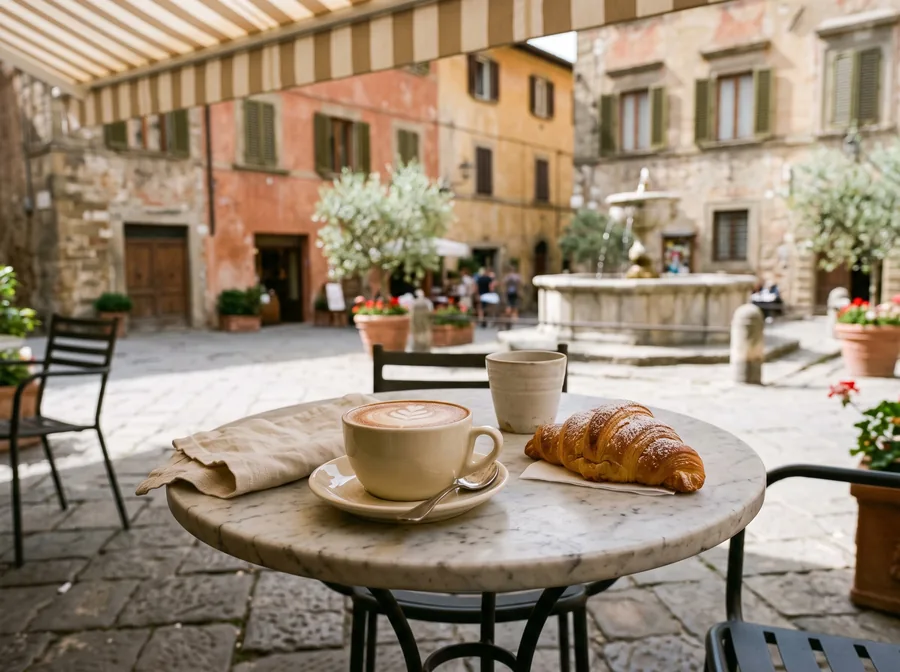
In Italy, cappuccino is a breakfast drink. Many Italians have it in the morning, happily together with a cornetto, the Italian croissant, which is called brioche in parts of northern Italy. After lunch or dinner, by contrast, people usually order a caffè, not a milky coffee, because milk is considered too heavy after a meal. This is not a ban: in the afternoon too you will, as a rule, be served your cappuccino without any fuss. At most you stand out as a visitor.
Breakfast at the bar is brief. A cappuccino and a cornetto, standing, in five minutes: this is how the working day begins in many cities. If you want to sit longer and read the newspaper, look for a pasticceria or a café with tables and knowingly accept the higher price.
In summer many bars offer cold variations. The caffè shakerato is shaken in a shaker with ice and a little sugar and served in a stemmed glass; the caffè freddo is sweetened, chilled coffee. If you like it hot yet light, order a caffè lungo or an americano and drink it at the counter without hurry. Even on hot days, though, the small caffè remains what most guests order.
How to order: phrases for the counter
- “Un caffè, per favore.” An espresso, please.
- “Un cappuccino e un cornetto.” A cappuccino and a croissant.
- “Un macchiato caldo” or “freddo”: espresso with a dab of warm or cold milk.
- “Un decaffeinato”, “un deca” for short: decaffeinated.
- “Con latte di soia” or “senza lattosio”: with soya milk or lactose-free, now available in many bars.
- “Da portare via”: to take away. Not every bar has takeaway cups.
- “Quanto pago?”: What do I owe?
A friendly “Buongiorno” on entering helps, and from the afternoon “Buonasera”. At a crowded counter there is rarely a fixed order of service. Eye contact with the barista and a clear, short order will get you there.
Coffee breaks in Tuscany, on Lake Garda and on the Amalfi Coast
The habits apply throughout the country, only the backdrop changes. In Florence, Siena or Lucca, bars with tables are often on the big squares, where a look at the price list is especially worthwhile. In the smaller places on a round trip, such as the one described in the article Tuscany in seven days, the bar on the square is both a meeting place and sometimes a point of sale for bus tickets.
On Lake Garda, many bars lie on the lakeside promenades near the landing stages. A caffè at the counter fits well into the wait for the next boat, as the article Lake Garda without a car allows for. On the Amalfi Coast, a hike such as the Sentiero degli Dei is best started early in the morning: a caffè and a cornetto at the counter then make a quick breakfast before the sun climbs over the slopes. In the evening the bar changes its face; what goes into the glass then is explained in the article on the aperitivo.


