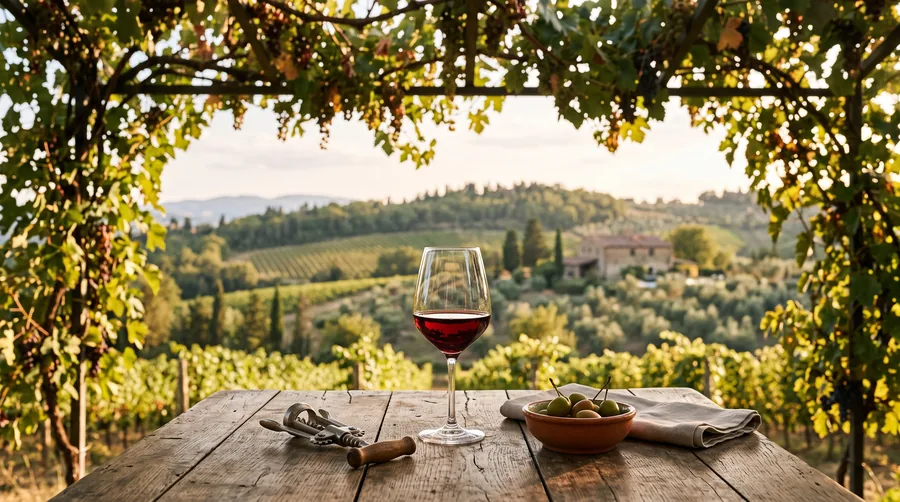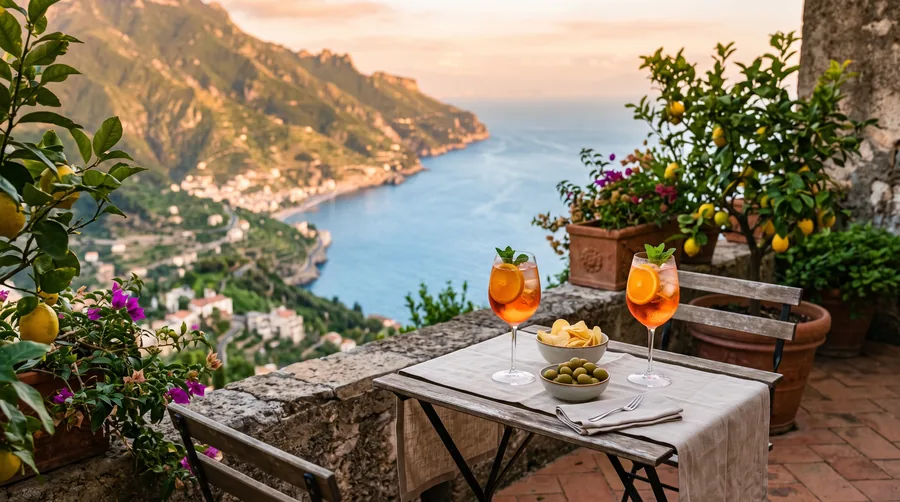
Between the end of the working day and dinner, the bars of Italy fill up. People meet for a glass, eat a few olives or crisps and then go off to dinner. That is the aperitivo: not a binge, but a short ritual meant to whet the appetite. The name says as much, as it goes back to the Latin aperire, to open. If you know the habits, you will find your way in any bar.
When and how the aperitivo works
The aperitivo begins in the early evening and ends when it is time for dinner; in Italy dinner is usually eaten later in the evening than many visitors are used to. As a rule you order one drink per person, accompanied by small nibbles, the stuzzichini. In many bars the waiter brings them with the glass at no extra charge: olives, crisps, nuts, small pieces of pizza or focaccia, cubes of cheese.
In larger cities the apericena has also become widespread, a blend of aperitivo and cena, dinner. You pay a higher price for the drink and help yourself from a buffet in return. Whether nibbles are included, whether there is a buffet and what it costs differs from bar to bar. A look at the menu or a quick question settles it: “Gli stuzzichini sono compresi?” (Are the nibbles included?).
Turin, Milan, Venice: three roots
Three cities in the north shape the drinks of the aperitivo. Turin is regarded as the home of vermouth. According to the Piedmont region, Vermouth di Torino originated historically in the city; since a decree of the Ministry of Agriculture of 22 March 2017 it has been a protected geographical indication. It means a flavoured wine from Piedmont, fortified with alcohol and flavoured mainly with wormwood (Artemisia) and other herbs and spices.
Milan stands for the bitters, red, bitter herbal liqueurs. Milanese bitter and Turin vermouth make up the drink that is called a Milano-Torino in Italy; topped up with a splash of soda water, it becomes the Americano.
In Venice and throughout the Veneto, the Spritz is at home. Its name probably derives from the German word spritzen, to splash. The much-told story of Austrian soldiers who found the wine too strong and diluted it with water, however, is not backed by documents, as the news agency AGI stresses. Today in Venice you order the Spritz in the bacari, the traditional wine bars, together with cicchetti, small bites.
The classics in the glass
The International Bartenders Association (IBA) lists the three best-known Italian aperitif cocktails in its official recipe list. These recipes serve bars worldwide as a reference, although in Italy every bar mixes them a little differently.
- Spritz: 9 cl Prosecco, 6 cl orange-coloured bitter aperitif and a splash of soda water, in a wine glass over ice, with a slice of orange. Instead of the orange aperitif, some bars use a stronger red bitter or an artichoke liqueur.
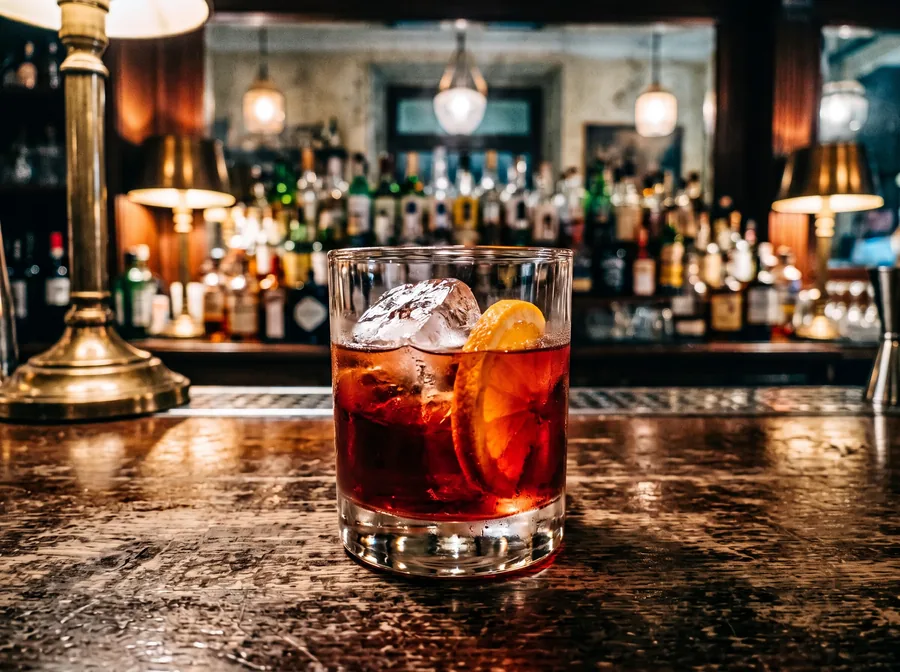
- Americano: 3 cl each of bitter and red vermouth in a tumbler over ice, topped up with soda water, with half a slice of orange and a lemon zest.
- Negroni: 3 cl each of gin, bitter and red vermouth, stirred over ice, with half a slice of orange. Distinctly stronger than the other two.
If you do not want to drink alcohol, order an analcolico. Many bars stock non-alcoholic bitter aperitifs, often in small bottles, and mix them with soda or tonic. A glass of Prosecco or a local white wine is also a perfectly proper aperitivo; nobody expects a cocktail.
What comes to the table
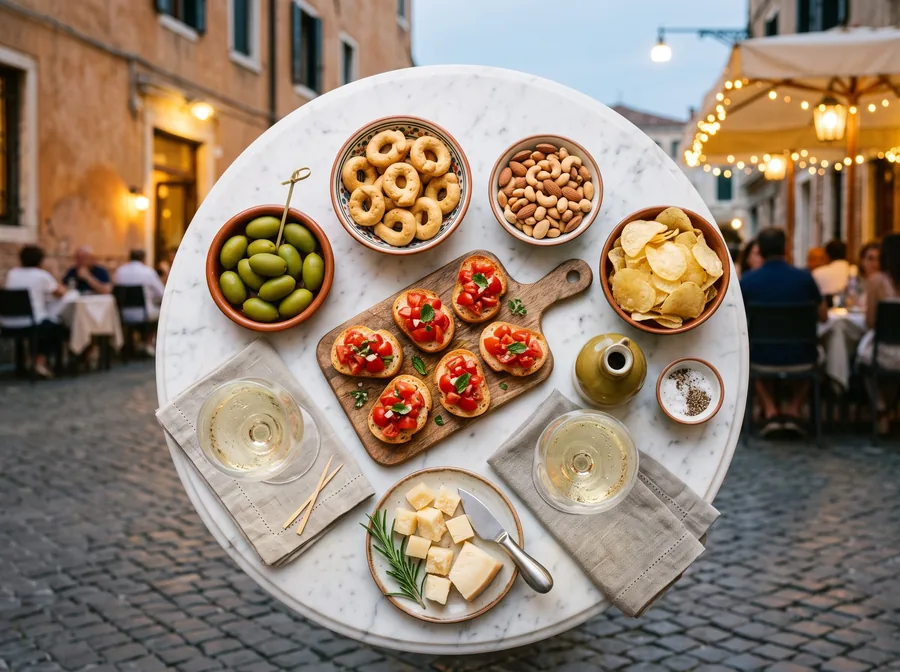
Stuzzichini accompany the glass, they do not replace a meal. Typical are green olives, potato crisps, salted nuts, taralli, small crunchy rings from southern Italy, crostini with spreads, cubes of hard cheese or a few slices of salami. In wine bars a board of cold cuts and cheese often comes with it, which is then charged separately.
If you want to replace dinner with an apericena, you should know that the buffet varies greatly from bar to bar: in some places pasta, vegetables and hot dishes, in others just a few plates of bread and crisps. Look at what is on offer before you order. Children are welcome at the aperitivo in many bars and get juice or lemonade; they share the nibbles with the adults.
A few habits help: stick to one glass, two at most, because dinner is waiting afterwards. At the buffet of an apericena, do not fill your plate at once for the whole evening; going back for more is normal. And do not plan the aperitivo too late, or the tables at the restaurant will be taken.
Aperitivo in Tuscany, on Lake Garda and on the Amalfi Coast
Tuscany: Florence is regarded as the birthplace of the Negroni. The region’s tourism portal tells the story like this: Count Camillo Negroni, a regular at the Casoni drugstore and perfumery, asked his bartender Fosco Scarselli between 1917 and 1920 to strengthen his Americano with gin. The result was the drink that bears his name today. If you prefer wine in Tuscany, order a glass from the region; background on the best-known red wine is provided by the article Understanding Chianti Classico.
Lake Garda: The western shore of Lake Garda belongs to the province of Brescia, and the Pirlo comes from Brescia. According to the city’s tourism portal, it now consists of one third each of white wine, bitter and soda water, with a slice of orange; Brescia lists it among its traditional products (De.Co.). On the eastern shore, in the Veneto, the Spritz is widespread, and everywhere on the lake a glass of Lugana or Bardolino goes well; more on this in the article Olive oil, Lugana and Bardolino.
Amalfi Coast: Here the aperitivo belongs on a terrace above the sea, with a glass of white wine from Campania or a Spritz. Limoncello, which is offered everywhere on the Amalfi Coast, usually comes to the table after the meal instead, well chilled as a digestif. You can read more about the lemons it is made from in the article The Lemons of the Amalfi Coast.
What the aperitivo costs
There are no fixed prices. In a simple bar, a glass of wine with stuzzichini costs much less than a cocktail on a famous piazza or on a hotel terrace above the sea, where you also pay for the location. The price list is posted or printed in the menu, and a quick look before you order spares you surprises. How the counter and the table differ in price is explained in the article Caffè in Italy. If you are still driving after the aperitivo, for example on the winding roads of the Amalfi Coast, order an analcolico.