Olives at the 46th parallel
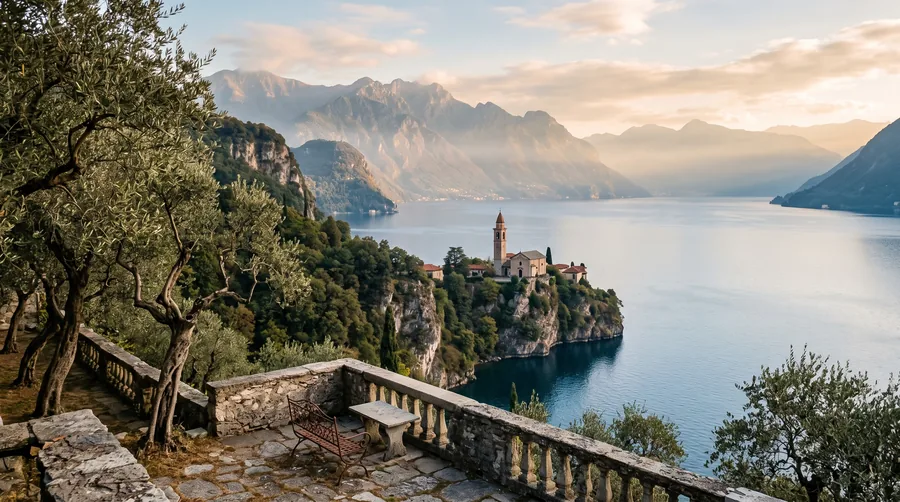
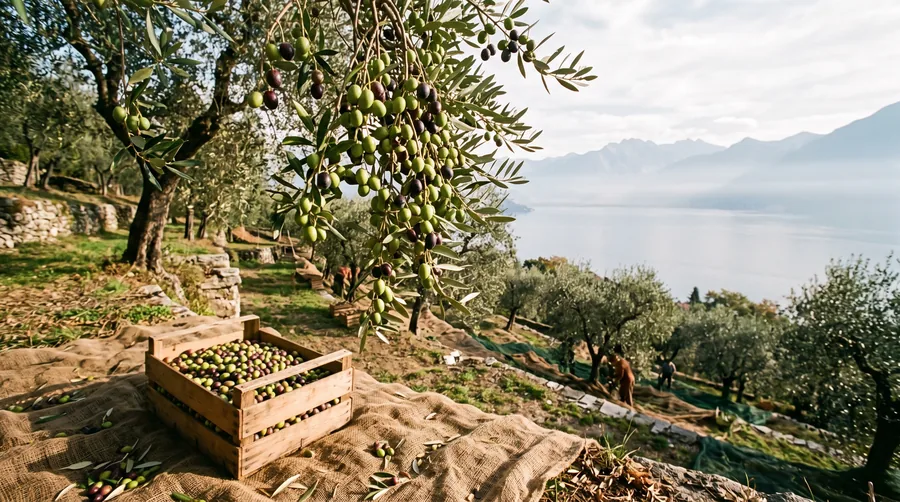
The olive tree is a plant of the Mediterranean, and yet it has grown on Lake Garda for centuries. According to the Trento Chamber of Commerce, at around the 46th parallel it reaches one of the northernmost limits of its cultivation in the northern hemisphere. A mild, well-ventilated climate makes this possible: Italy's largest lake and the hills framed by mountains create a microclimate of their own which, according to the Olio Garda DOP consortium, resembles the Mediterranean climate.
The history reaches far back. According to the consortium, the olive tree is documented on the lake as early as the 7th century, a Lombard edict punished anyone who damaged olive trees, and in the Middle Ages Garda oil was so valuable that four to six kilograms could be worth as much as a pig. Many of the terraces on the slopes date from the Renaissance.
Garda DOP: the olive oil from the lake
Since 1997, Garda has been a protected designation of origin (DOP) for extra virgin olive oil. The area covers the shores in the provinces of Brescia, Verona, Mantua and Trento, and all steps from harvest to bottling take place in the municipalities around the lake. The label may carry an additional designation: Garda Bresciano, Garda Orientale or Garda Trentino. The most important varieties are Casaliva, Frantoio and Leccino. The Casaliva, also called Gargnà in Trentino, has a special feature: according to the Trento Chamber of Commerce, its olives never turn completely black, even when fully ripe.
In terms of flavour, the consortium describes the oil as lightly to medium fruity, with notes of fresh olives, balanced between bitterness and pungency, and with an aftertaste of almonds. Harvesting takes place in autumn; in Trentino it is mostly still done by hand between November and December, before the fruit is fully ripe. The Chamber of Commerce describes the Trentino oil as green with golden reflections, with a scent of herbs, almond and artichoke.
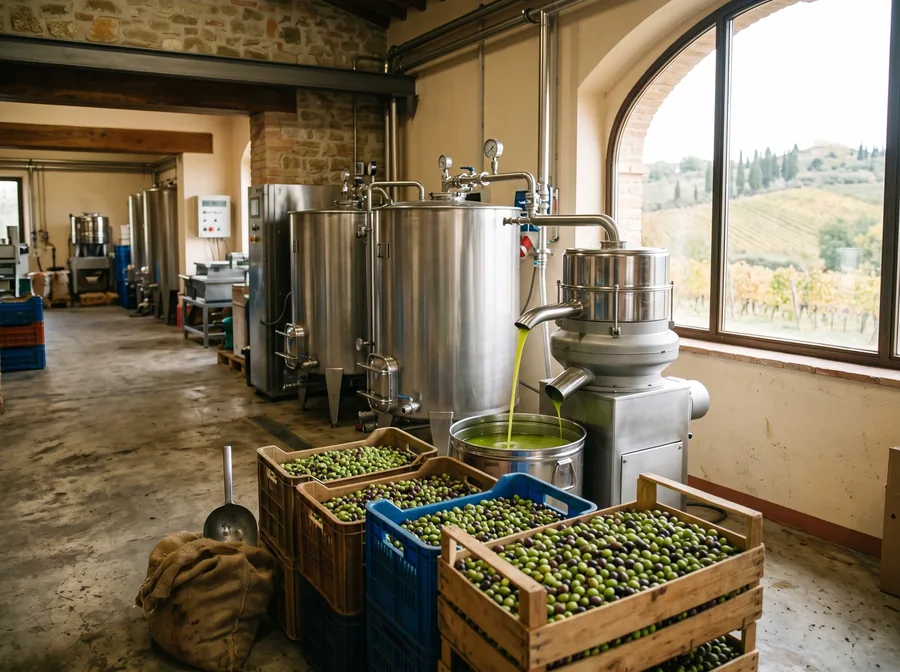
When buying: look for the designation Garda DOP and the harvest year, buy in dark bottles or tins and, as the consortium advises, store the oil protected from light and heat. How an oil mill works is shown by the Manestrini oil mill in Soiano del Lago: there the olives are processed within 24 hours of delivery, and visits with tasting are possible by reservation.
Lugana: the white wine from the south shore
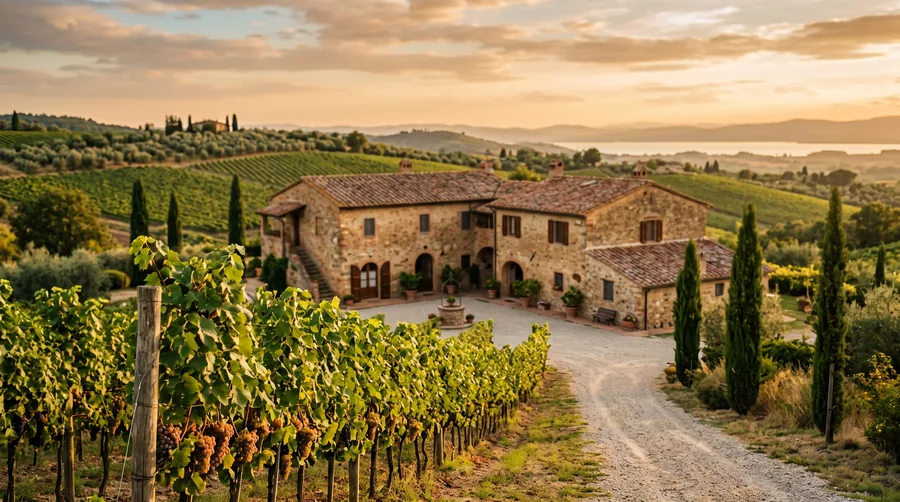
South of the lake, between Desenzano, Sirmione, Lonato, Pozzolengo and Peschiera del Garda, lies the Lugana area. Four of the five municipalities belong to the province of Brescia and thus to Lombardy, Peschiera to Verona and Veneto. Today the wine usually comes 100 per cent from the Turbiana grape variety; the rules permit up to ten per cent of other, non-aromatic white varieties. The vines stand on layered, mostly calcareous clay soils from the moraine era, which become sandier in the hills. According to the consortium, the area comprises over 2,000 hectares of vineyard, and the breezes from the lake provide a mild, balanced climate.
| Type | What defines it (according to Consorzio Tutela Lugana) |
|---|---|
| Lugana | fresh vintage wine, almost 90 per cent of production |
| Lugana Superiore | since 1998, at least one year of ageing from the harvest |
| Lugana Riserva | at least 24 months of ageing, 6 of them in the bottle |
| Lugana Vendemmia Tardiva | late harvest from late October to early November, denser and slightly sweeter |
| Lugana Spumante | sparkling wine made by the tank method or bottle fermentation, in the rules since 1975 |
The editorial team presents an accommodation in the heart of the area, with its own winery, wine tastings and restaurant, with Selva Capuzza.
Bardolino and Chiaretto: red and rosé from the east shore
Bardolino grows on the east shore and in its hinterland. The wine-growing area lies on the moraine hills of the glacial amphitheatre on the Verona shore, with a mosaic of Mediterranean climate at the lake, continental climate in the hinterland and mountain climate at altitude. The Classico zone comprises the municipalities of Affi, Bardolino, Garda, Lazise, Costermano sul Garda and Cavaion Veronese; Torri del Benaco belongs to the extended area but, according to the consortium, now has hardly any vines, with olive trees dominating there.
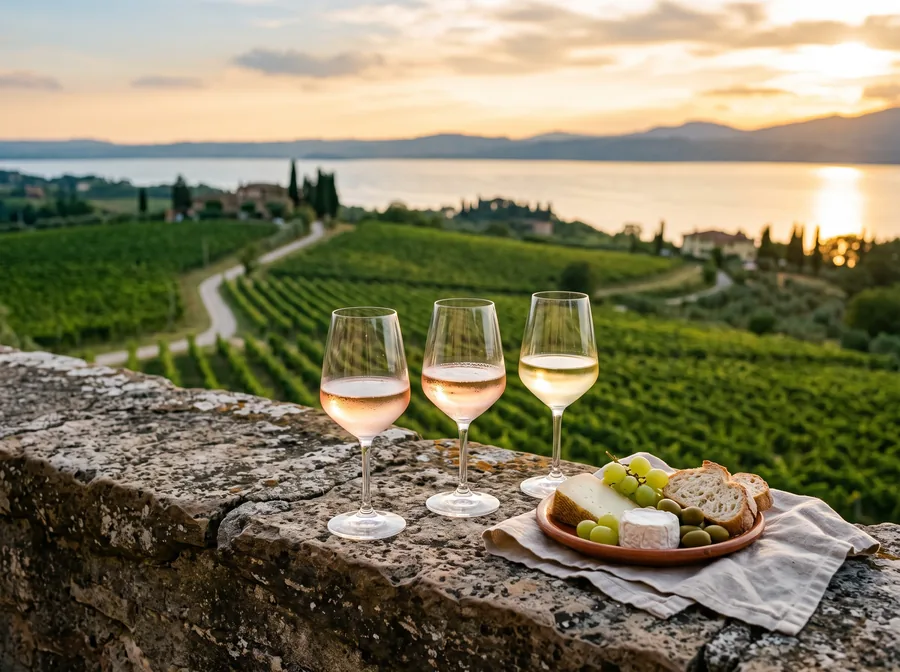
The Chiaretto di Bardolino, a rosé with a short skin-contact time, is made from the same grapes as the red Bardolino. Corvina may make up as much as 95 per cent, Rondinella at least 5 per cent. The consortium describes it as a delicate petal pink, fresh, dry, with a distinct salty, mineral note that it attributes to the moraine soils. It recommends serving it at 8 to 10 degrees and drinking it within one to two years. Chiaretto is also made as a sparkling wine, usually by the tank method, with some producers also using the classic method.
Valtènesi: the rosé of the Groppello grape
On the south-west shore, on the moraine hills on the Brescia side, lies the Valtènesi. Its rosé has a surprisingly precisely dated history: Pompeo Molmenti, senator from Venice, former mayor of Moniga del Garda and enthusiastic winegrower, developed a method for rosé from Groppello grapes in 1896, inspired by the landscape at the lake and by journeys to France. The grapes were pressed gently and left in contact with the skins for only a few hours, which gave the wine its pale pink colour. This is the origin of the name “vino di una notte”, wine of one night. According to the Consorzio Valtènesi, the preparation still follows this principle at its core today, even though technique and experience have moved on.
Visitors to the area will also find olive groves among the vineyards; the Manestrini oil mill mentioned above is in Soiano del Lago. The article Lake Garda off the beaten track describes quiet destinations in the Valtènesi such as the Rocca di Manerba.
How to taste on the spot
- Reserve: many wineries and oil mills receive visitors only by appointment, at Manestrini for example with at least 48 hours' notice.
- At the right time: olive harvest and pressing run from late October to December; the Lugana Vendemmia Tardiva is picked from late October to early November.
- Combine: Lugana and Valtènesi lie close together in the south-west, Bardolino opposite on the east shore; the ferry between Maderno and Torri del Benaco or the scheduled boats connect the two sides.
- For aperitivo: a glass of Chiaretto or Lugana suits Italy's early-evening culture; more in the article Aperitivo.
- Do not drive yourself: after a wine tasting, bus and boat are the better choice; you can read how that works under Lake Garda without a car.