What “off the beaten track” means on Lake Garda
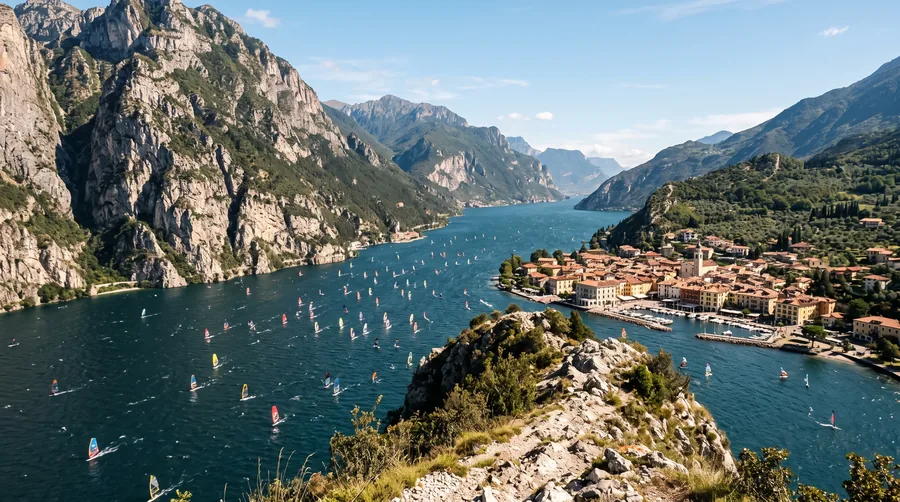
Lake Garda is Italy's largest lake, and in summer you notice this in some places above all through the crowds: on the Sirmione peninsula, on the lakeside promenades of Malcesine, Limone, Bardolino and Lazise. Peace is rarely a matter of great distances here. Usually it is enough to drive a few kilometres further, climb a few hundred metres, or time your visit for the morning, the spring or the autumn.
The editorial team has chosen the following destinations so that each one offers its own reason to visit: history, a view, farming, or a path that does not exist along the lakeside road. For each place you will read when it is worth going and how to get there.
Districts such as Villa and Bogliaco on the water, citrus-fruit reliefs in the cloister of San Francesco and, with La Malòra, a limonaia you can visit. Best time to travel: April to June and September.
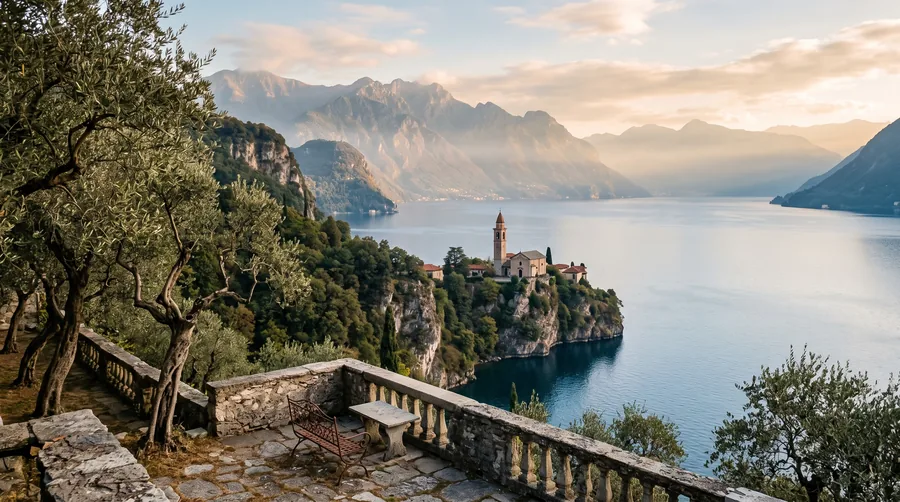
Sanctuary near Tignale on a rocky spur high above the lake, with views from Monte Baldo to the Sirmione peninsula. From the first wayside shrine of the Stations of the Cross at 574 metres, it is a steep climb of about 30 minutes.
Destination of the Strada della Forra, which climbs about six kilometres from Porto di Tremosine through the Brasa gorge. At the top lie hamlets, meadows and agriturismi; the road is often closed, so check its status before you set off.
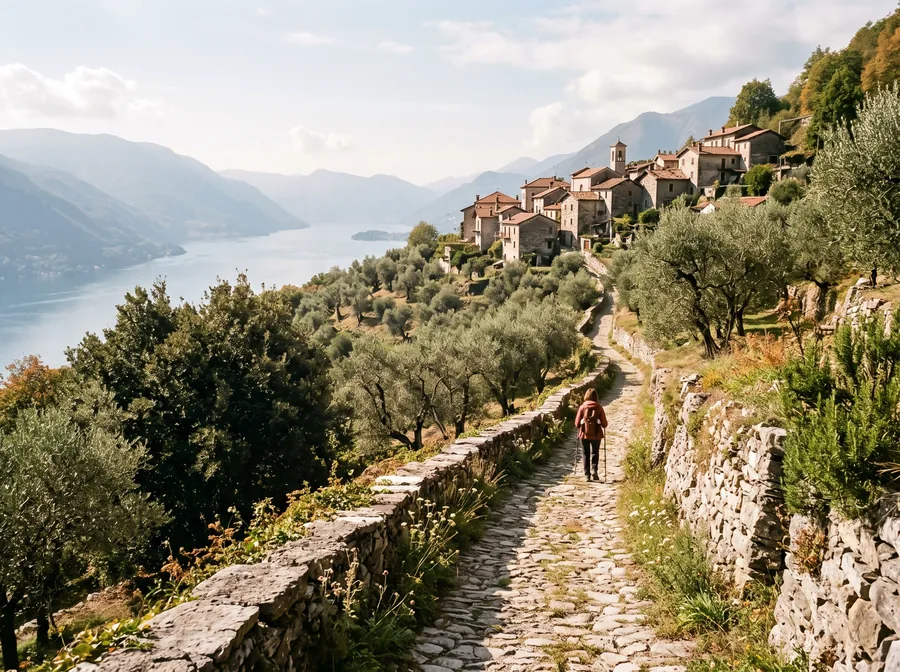
Medieval, almost abandoned hamlet at the foot of Monte Baldo with olive groves, stone houses, the remains of a castle and a Romanesque church. You reach it on foot along old mule tracks; sturdy shoes and water belong in your rucksack.
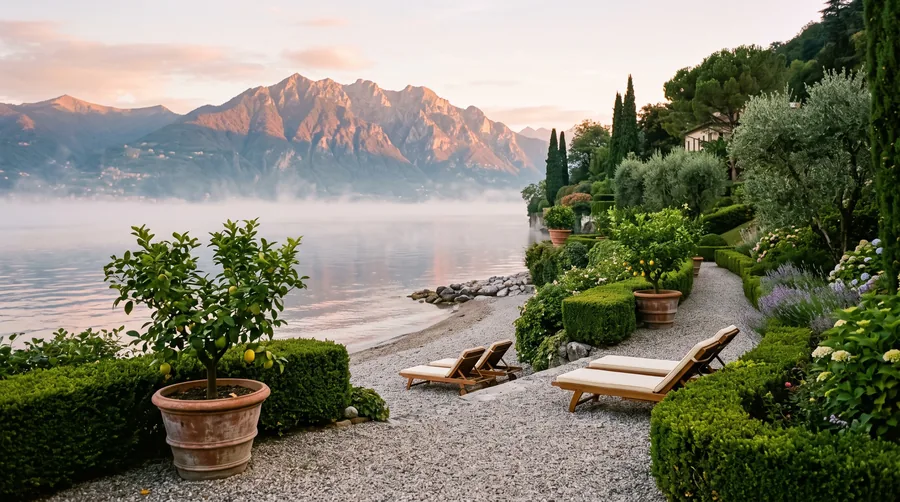
Headland about three kilometres west of Garda: an avenue of old cypresses leads through an olive grove to Villa Guarienti, and the bay of Baia delle Sirene lies beside the little harbour. Come outside summer weekends, early in the morning or in the late afternoon.
Rock above the Valtènesi with views of the lake, vineyards and olive groves as far as Monte Baldo, plus castle remains, an archaeological museum and Romanesque chapels with frescoes. Reachable by Arriva bus from Desenzano or Salò.
Medieval village above Riva del Garda with stone houses, arcades and narrow cobbled lanes, about half an hour's walk from the Lago di Tenno. In August the village celebrates the Rustico Medioevo festival.
West shore: Gargnano, Tignale and Tremosine
Gargnano: lemons, cloister and sailing history
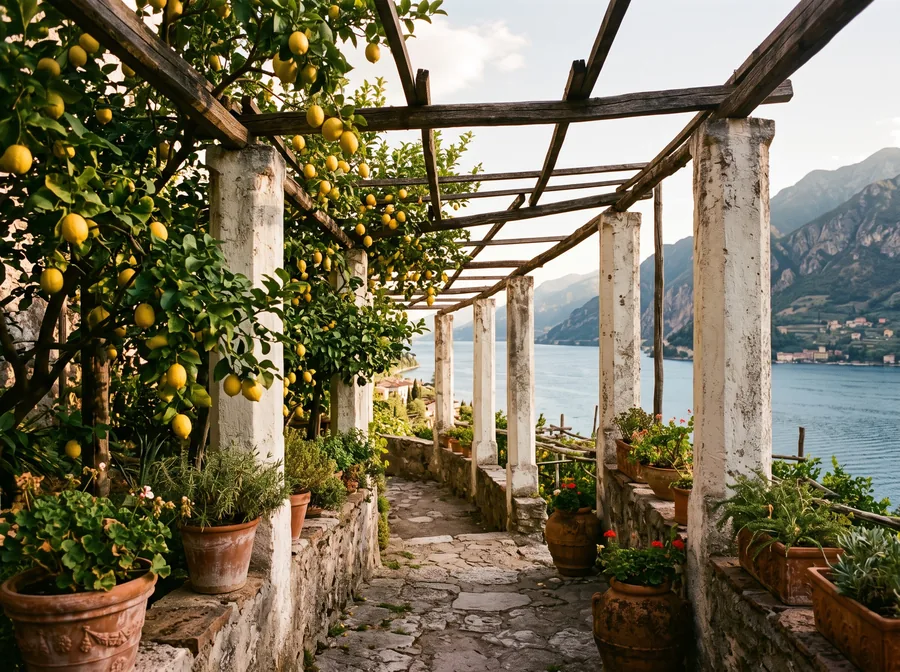
Gargnano lies on the upper west shore between Toscolano Maderno and Limone and strings several districts along the water, among them Villa with its little harbour, and Bogliaco. The town is closely tied to the history of citrus fruit on the lake. According to the Lago di Garda Lombardia tourism consortium, Franciscans in Gargnano were already planting lemons in large terracotta pots in the 13th century; reliefs of citrus fruit on the capitals in the cloister of San Francesco are a reminder of this. Later came the limonaie, terraced gardens with tall stone pillars over which roofs of wood and glass were laid from November to March. One of these, the Limonaia La Malòra of the Gandossi family, can be visited; the old Lake Garda variety Madernina also grows there.
Sailors know Gargnano for the Centomiglia, a regatta that the Circolo Vela Gargnano has held in early September since 1951. When: April to June and September, when the lemon gardens are green and the lakeside paths are not crowded. Getting there: Gargnano has landing stages for the scheduled boats and lies on the bus line along the western lakeside road. A house with a historic limonaia in its garden is presented by the editorial team in Villa Giulia in Gargnano.
Tignale: a sanctuary on a rocky spur
On a rocky spur high above the lake stands the Santuario di Montecastello, also known as Madonna della Stella. It was built on the remains of an older small temple that had later been converted into a castle. From the top, according to Visit Brescia, the view stretches from Monte Baldo to the Sirmione peninsula. The walk is the most beautiful way up: park on the road between Olzano and Prabione at the first wayside shrine of the Stations of the Cross, at 574 metres, and climb steeply for about 30 minutes. In the low season you can also drive right up to the sanctuary, but the approach is very steep with tight hairpin bends.
Down at the lake, the Limonaia Prà dela Fàm is worth a visit; it lies right on the shore and offers a multilingual tour by QR code. When: spring and autumn, so that the climb does not fall in the midday heat. It is best to check the sanctuary's opening hours in advance with the Tignale tourist office.
Tremosine: through the gorge to the plateau
From Porto di Tremosine, the Strada della Forra climbs some six kilometres through the Brasa gorge to Pieve di Tremosine. The road opened in 1913; halfway along, a natural rock narrows so tightly that a traffic light controls the traffic. According to Italy's national tourism portal it is often closed for maintenance, so check its status before you set off. Up top, hamlets, meadows and agriturismi are scattered across the plateau, which you can also reach without a car on small Arriva buses. When: May, June, September and October, as early in the day as possible.
East shore: Campo di Brenzone and Punta San Vigilio
Campo di Brenzone: a hamlet on a mule track
Above Brenzone sul Garda, at the foot of Monte Baldo, lies Campo, a medieval hamlet that is now almost abandoned. Holm oaks and olive trees surround it like an amphitheatre. Campo can be reached along old mule tracks, and on the way the view of the lake opens up again and again. At the top you will find olive groves, stone houses, the remains of a castle, a Romanesque church and a fountain; the small church of San Pietro in Vincoli stands at the edge of the hamlet. Concerts and cultural events take place in Campo every year.
When: March to June and September to November, ideally in the morning. The paths are steep and stony; sturdy shoes and water belong in your rucksack. The hamlet is not entirely abandoned, so please respect gardens and farmyards. Getting there: the lakeside districts of Brenzone have boat landing stages and lie on the bus line along the eastern lakeside road.
Punta San Vigilio: cypresses, villa and little harbour
West of the town of Garda, the last spur of Monte Baldo juts into the lake as a headland. A long avenue of centuries-old cypresses leads through an olive grove to Villa Guarienti, which, according to the Veneto Region, dates from around 1540, probably to a design by the architect Michele Sanmicheli. The client was Agostino Brenzoni; the property later passed to the Guarienti counts. The garden follows the pattern of an Italian garden of the late Renaissance. At the little harbour stand a very old church, rebuilt several times, and a building with a double loggia that is now a hotel. Beside it lies the bay of Baia delle Sirene, which is run as a beach park in summer; entrance fees and opening hours are available from the operator.
When: outside summer weekends, early in the morning or in the late afternoon, when the light falls across the lake onto the cypresses. Observe the signs on site showing which areas are open to visitors. Getting there: the town of Garda is easy to reach by bus and boat; the headland lies about three kilometres west of it.
Valtènesi: moraine hills and the Rocca di Manerba
In the south-west, between Salò and Desenzano, lies the Valtènesi, a gentle landscape of moraine hills where vines, olive trees and small villages alternate. You get the best overview from the Rocca di Manerba: from the rock above the lake the view takes in the water, the vineyards and olive groves, and across to Monte Baldo. On the site are the remains of one of the important medieval castles on Lake Garda, along with an archaeological museum, Romanesque chapels with frescoes and a nature reserve, the Riserva Naturale Orientata della Rocca e del Sasso.
The Valtènesi is also home to a rosé of its own made from the Groppello grape; you can read more in the article on olive oil, Lugana and Bardolino. If you would like to see oil being made up close, you will find the Manestrini oil mill in Soiano del Lago. When: May and June for walks, late October to December for the olive harvest. Getting there: by Arriva bus from Desenzano or Salò.
Northern hinterland: Canale di Tenno and Lake Tenno
Above Riva del Garda lies Canale di Tenno, a medieval village preserved almost unchanged: stone houses, arcades, barrel vaults and narrow cobbled lanes. The village belongs to the association I Borghi più belli d'Italia. In the Casa degli Artisti, named after the Turin painter Giacomo Vittone, who often painted Canale, exhibitions and cultural events are held. About half an hour's walk away lies the Lago di Tenno, a small protected area with an island in the middle.
When: June and September for walks; in August the Rustico Medioevo festival invites visitors with costumes, torches and regional dishes, and in winter a Christmas market fills the lanes. If you are staying on the north shore in high summer, you will find a quiet half-day trip up here.
How to plan the quiet destinations
- Season: April to June and September to October combine mild weather with fewer crowds; the Best time to travel tool shows temperatures and crowds for each month.
- Time of day: you will find viewpoints and narrow mountain roads more relaxed in the morning than at midday.
- Boat instead of car: Gargnano, Brenzone and Garda have landing stages; how to combine boat, bus and train is explained in the article Lake Garda without a car.
- Closures and opening hours: mountain roads such as the Forra and small sanctuaries keep changing hours; check them shortly before your visit.
- Base: which side of the lake suits you best as a base is covered in Lake Garda north or south.